Jump To:
Raleigh's Commitment
Raleigh is a Bee City USA
Since June 2017, Raleigh has been an official member of Bee City USA and is one of more than 260 affiliates in 44 states across the nation to officially become a Bee City USA. This is a joint effort between the city and community partners to continue to educate the public and provide support for pollinators and habitats in Raleigh. Raleigh has committed to creating sustainable habitats for pollinators, working with community partners and providing support for pollinator projects around the city.
Mayor's Monarch Pledge
In March 2021, former Mayor Mary-Ann Baldwin signed the National Wildlife Federation's Mayors' Monarch Pledge, joining hundreds of other U.S. communities committed to creating habitat for the monarch butterfly and pollinators, and educating residents about how they can make a difference at home and in their community.
Why Pollinators Matter
What are Pollinators?
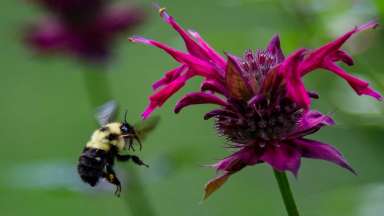
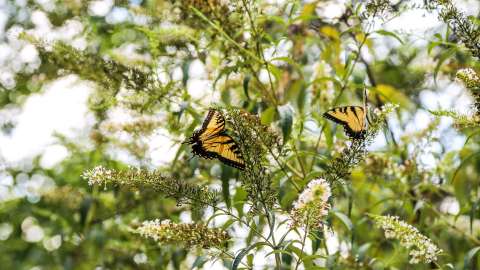
Some examples of pollinators are birds, bees, butterflies, moths, beetles, and other animals. Pollination occurs when pollen is moved or carried from one plant (or part of a plant) to another.
What are Invertebrates?
95% of all animals on this planet are invertebrates. According to the great biodiversity scientist E.O. Wilson, invertebrates, the little bugs you find under leaves and visiting flowers, “run the world (1987).” These creatures stitch our planet together, which makes conservation of the utmost importance as their populations continue to decline.
Why are Pollinators and Invertebrates Important?
Pollinators are critical to creating and maintaining the habitats and ecosystems that many animals rely on for food and shelter. One-third of the food crops humans eat depend on pollinators.
Insect populations are declining at 2% per year. If we were to lose all invertebrates, humans and all the other vertebrate species would perish in a matter of months, followed by flowering plants, which would lead to mass extinction and set life back on this planet to a state of a billion years ago, composed primarily of bacteria, algae, and a few other very simple multicellular plants. Insects are the food for all fish and all birds.
Modern land management practices across many sectors are not good for invertebrates. Farming, landscape maintenance, and human development are contributing to a decline in invertebrates worldwide due to increased habitat destruction and fragmentation and increased pesticide use. Habitat loss and climate change are the greatest threats to biodiversity worldwide.
Raleigh's Pollinator Projects
Many City of Raleigh departments support pollinators through programs, habitat installation, and events.
Wildlife and Pollinator Program
Shares information and resources about pollinator protection and pollinator habitats in City of Raleigh Parks.
Monarch Waystation Program
Supports migrating monarch butterflies.
Invasive Species Program
Engages volunteers to remove non-native species from City parks and other properties to allow native plants to thrive and support pollinator species.
Housing and Neighborhoods Department
Provides Neighborhood Funds to encourage neighborhood enhancement projects. There are two levels of these grants which range in amount from $250 up to $1,000 for a variety of projects including pollinator habitat, community gardens, urban agriculture, and tree planting.
Stormwater Management Division
Offers resources for planting rain gardens. These installations help improve water quality, reduce runoff from impervious surfaces, and attract pollinator species.
Urban Forestry
The Urban Forest of Raleigh is extremely important to the conservation of invertebrates. A single mature oak tree supports more species than any other.
Raleigh's Pollinator Gardens
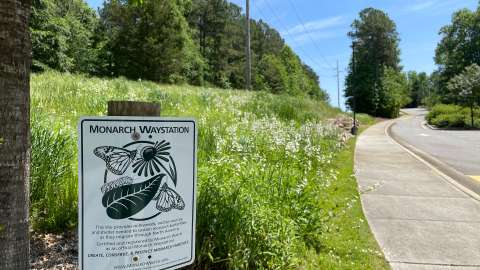
Twenty-three Raleigh Park locations have been certified by Monarch Watch. By becoming a certified monarch habitat, we show that we are creating, conserving, and protecting monarch habitats. Our Raleigh parks provide plants and resources needed for monarchs to produce the next generation of butterflies by sustaining their migration. They also support other pollinator species and provide a diversity of colors and textures for visitors to enjoy.
We invite you to visit one of our certified Monarch Waystations when visiting the parks below.
Greenway Locations:
Neuse River Greenway Trail - Falls Dam Parking Lot, 12088 Old Falls of Neuse Rd, Raleigh, NC 27614
Neuse River Greenway Trail - Mial Plantation Parking Lot, 6008 Mial Plantation Rd, Raleigh, NC 27610
Walnut Creek Greenway Trail – Rock Quarry Road, 35.762436, - 78.613824
Walnut Creek Greenway Trail – Wilmington Street, 35.757258, - 78.640063
Ways to Take Action
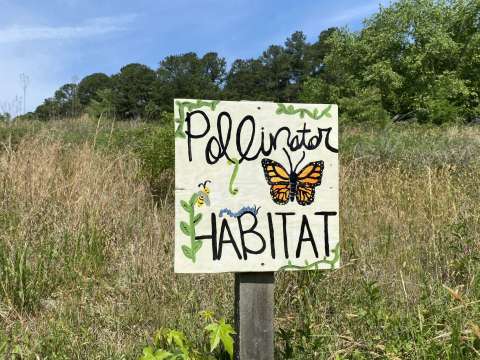
Invertebrate conservation is only possible with the preservation of ecosystems and their structure, function, and processes.
- Preserve Existing Habitats
- Link Habitats Together
- Create New Habitat
- Get Involved!
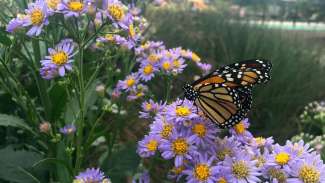
Preserve and Manage Existing Habitats
- Wake County Land Cover Analysis and Tree Canopy Assessment (2022) found that between 2010-2020 Wake County lost 11,122 acres of tree canopy. That’s approximately the size of two Umstead Parks in 10 years!
- The City of Raleigh manages its urban forest through many means:
- Urban Forestry, including street trees and tree conservation areas
- Parks and Greenways comprise over 10,000 acres of land
- Invasive species management
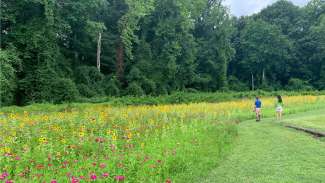
Link Habitats Together
- According to well-documented Species Area Relationships, larger contiguous habitats support more species than smaller, more fragmented habitats.
- Developers can utilize mechanisms available to them in the Unified Development Ordinance (UDO), such as conservation development, which preserves larger amounts of contiguous greenspace in exchange for smaller lot sizes and higher densities.
- Greenways master planning aims to connect parks and greenways into contiguous natural areas.
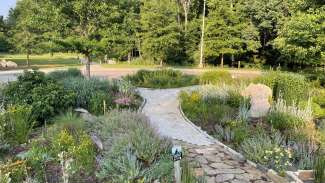
Create New Habitat
Start by providing the following:
- Food
- Provide flowering plants year-round.
- Provide host plants for imperiled species, like the monarch butterfly, that depend upon milkweed for survival.
- Shelter
- Adjusting your landscape maintenance practices can have a significant effect on insect populations. For example, you can leave the leaves on plants – leaves provide habitat for many overwintering populations of insect.
- When you cut back your perennials and grass, timing and height are important. Delay your cutback to spring instead of fall, and when you do cut them back, cut them no lower than 8” to provide a critical nesting habitat for bees.
- Protection
- Invasive species removal
- Pesticides
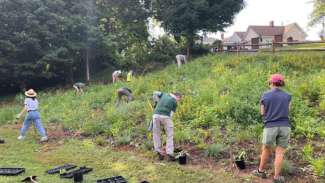
How to Attract Pollinators
There are some things you can do to attract pollinators in your own backyard:
- Plant native plants that provide nectar and serve as host plants.
- Leave the weeds.
- Consider a less frequent mowing cycle.
- Provide a shallow dish with pebbles and water.
- Minimize the use of insecticides.
- Avoid buying plants pre-treated with insecticides.