Illustration of a busy cityscape

2026 Bond Referendum

City of Raleigh residents will have the opportunity to vote on a referendum November 3, 2026 that would allow the City to borrow up to $203 million in general obligation bonds for transportation and housing projects in the city. If approved, the City will be able to borrow this money without raising property taxes.

Why isn’t a tax increase needed?

The City began strategically setting aside money for large capital projects in a dedicated Debt Fund starting with the FY26 budget. We call this Steady State. Each year, money from both sales and property taxes contribute to the fund, though the amount will fluctuate annually. The City's financial team estimates how much debt it can afford utilizing the Debt Fund without increasing taxes. That amount is currently $203 million every four years. 

While property and sales tax collections generally increase year to year, there is a risk they may decrease. This would reduce the amount of debt available through Steady State. 

Human cutouts standing over blocks that spell fund
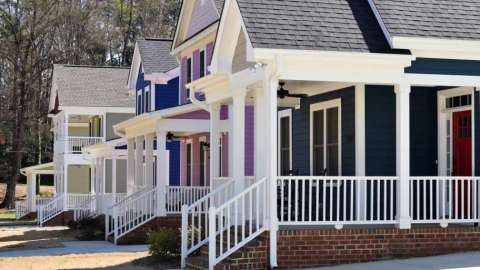
East College Park Housing

Affordable Housing Bond
$101.5 million

$57.6 million

Housing development and preservation efforts


Gap financing, rehabilitation of City-owned housing, and development of new City-owned housing. 

$10.4 million

Homebuyer assistance and preservation goals


Programs that work to keep seniors at home as they age and home-buyer assistance programs for eligible buyers that earn at or below 80% of the area median income.

$21.5 million

Reserve for major project development


Higher-profile redevelopments of City-owned sites to create vibrant communities for a variety of income levels.

$12 million

Homelessness response


Funding for Wake at Home, a public-private partnership coordinated by the Wake County Continuum of Care that supports the decommissioning of homeless encampments and connecting people living outside to housing and services. 
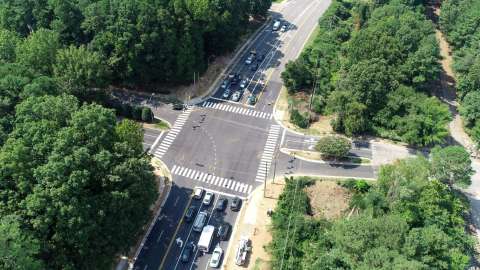
Separated bike lanes on Lineberry Road

Transportation Bond
$101.5 million

$51.5 million

Three road infrastructure projects


Marsh Creek Road and Trawick Road-West, Ebenezer Church Road, and general-purpose lanes along the Southern Bus Rapid Transit corridor that are not eligible for federal funding.

$40 million

Transportation plans and programs adopted by Council
  • The “Big Jump” an expansion of safe walking and biking networks with more than 5 miles of sidewalks and 50 miles of bikeways in a five-year timeline. The Big Jump is part of the Active Mobility Plan.  
  • Investments that support the adopted Comprehensive Safety Action Plan. This plan uses data to recommend changes to traffic flow and infrastructure at busy intersections or near schools to reduce or eliminate traffic fatalities and serious injuries.

$10 million

Neighborhood Traffic Management Program and partnerships


Traffic calming and intersection safety on neighborhood streets as well as partnerships that help support existing planned projects.
How has the City used bonds in the past? 

The City uses bonds to fund major projects including infrastructure, housing and parks. Some recent projects funded by bonds include:

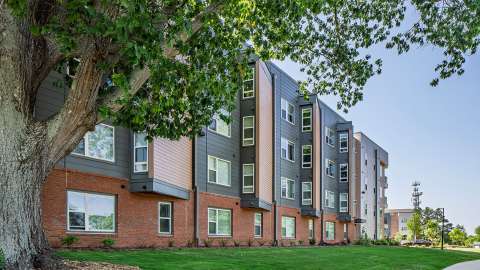
Milner Commons
Milner Commons (2020 Housing Bond)

An affordable apartment complex that opened this spring featuring 156 units for seniors making 40 to 60 percent of the area’s median income.

Learn more


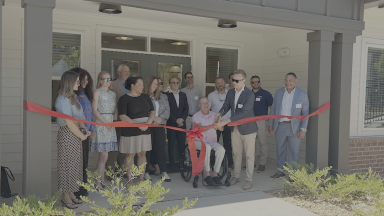
Pines at Peach Ribbon Cutting
The Pines at Peach Road (2020 Housing Bond)

A new affordable apartment complex for residents making 40 to 60 percent of the area median income. The City purchased land with funds from the 2020 Housing Bond and 119 apartments were created.

Learn more

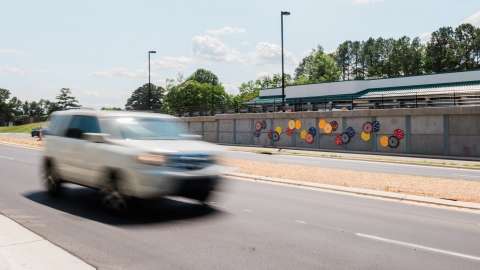
Colorful discs line a wall along a roadway where a vehicle drives past
Atlantic Avenue (2017 Transportation Bond)

This project created a wider road, dedicated left-turn lanes, and a median for drivers as well as extended sidewalks and a multi-modal path for pedestrians and cyclists. The project used funds from the 2017 Transportation Bond for these improvements between Highwoods Blvd. and New Hope Church Road.

Learn more

multi-use path
Blue Ridge Road (2017 Transportation Bond)

One of the City’s Complete Streets projects, we installed curb-and-gutter, sidewalks, and a multi-use path, all of which opened earlier this year between Duraleigh Road and Homewood Banks Drive.

Learn more

Frequently Asked Questions

If the projects end up needing more funding than what the bonds allow, how would the City fund the incremental needs?

City Council always has the option to supplement the bond funding with revenues from other sources including public/private grants as well as City funds that might be available.

What happens if the bonds are not approved by voters?

City Council may fund projects through other sources; however, if funding is not available, the projects would not move forward.

If the bonds are approved, will my taxes go up?

No additional property tax increase is required to pay for the 2026 general obligation transportation and affordable housing bonds.  

What language will I see on the November ballot?

There will be two bond orders to vote on your ballot in November 2026, separate orders for Housing and Transportation.  The language for each one will be very similar to the sample ballot shared with City Council and published in the News and Observer:

  • Housing Bond Language
    Shall the order adopted on May 19, 2026, authorizing not exceeding $101,500,000 HOUSING BONDS of the City of Raleigh, North Carolina, plus interest, for the purpose of providing funds, together with any other available funds, for community development programs to provide and rehabilitate multifamily and single family housing inside the corporate limits of said City, principally for the benefit of persons of low and moderate income, including, without limitation, (a) the construction or rehabilitation of housing or neighborhood revitalization improvements, (b) programs to provide loans and other financial assistance to such persons and to public and private providers of housing and (c) the acquisition of any related land, rights of way and equipment, and providing that additional taxes may be levied in an amount sufficient to pay the principal of and interest on the bonds, be approved.
  • Transportation Bond Language
    Shall the order adopted on May 19, 2026, authorizing $101,500,000 TRANSPORTATION BONDS of the City of Raleigh, North Carolina, plus interest, for the purpose of providing funds, together with any other available funds, for various transportation related improvements inside and outside the corporate limits of said City, including, without limitation, street, sidewalk and streetscape improvements, bridges, bicycle lanes, curbs and drains, traffic controls, greenways, bus and train station and shelter improvements, and the acquisition of any related land, rights of way and equipment, and providing that additional taxes may be levied in an amount sufficient to pay the principal of and interest on the bonds, be approved.

The language on the ballot is prescribed by the NC state legislature. Under the Bond Transparency Act, total estimated cost over the life of the bond and the estimated property tax liability increase are now standard disclosures within the ballot. The City has filled in the disclosures indicating in the last paragraph that the direct tax impact of the bonds would be “$0 (zero dollars)”.

The projects identified above are planned uses of bond proceeds and are subject to change. Bond proceeds may be allocated to other eligible projects or uses, provided such uses are consistent with the intent and authorized purposes of the applicable bond orders. 

Scroll to top