
This upcoming February, explore the programs, exhibits, and historic landmarks that the city has to offer, honoring the contributions and history of African Americans in Raleigh. Many of these are free, and some are available year-round.
Black History Month Events and Exhibits
Living in Color
Tuesday, Feb. 3 - Saturday, Feb. 28
Times Vary
Age: All
Cost: Free
Dix Park Chapel, 1030 Richardson Dr, Raleigh, NC 27603
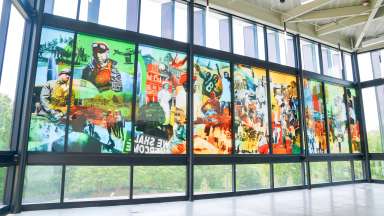
For the past four years, Living in Color has become a premiere Black History Month celebration of creativity, shining a spotlight on over 100 artists of every medium, style, and stage in their artistic journey.
A Roadmap to Freedom
Wednesday, Feb. 18
6:45 - 8:30 p.m.
Age: All
Cost: Free
City of Raleigh Museum, 220 Fayetteville Street, Raleigh, NC 27601
The Friends of the City of Raleigh Museum, in partnership with the Capital City Lawyers Association, presents "A Roadmap to Freedom". Local Raleigh attorney Lex-Jordan Ibegbu of Ibegbu Law, PLLC, presents a legal narrative of the realization of African Americans' rights.
Black Superhero Gallery
Friday, Feb. 20
5 - 7 p.m.
Age: All
Cost: Free
City of Raleigh Museum, 220 Fayetteville Street, Raleigh, NC 27601
Superheroes come in all hues and have incredible abilities! Learn the history of African American comic book superheroes from then and now. Join us for a discussion and a display of historic comic books, as well as discuss Black superheroes in comics and film.
Black History Trolley Tour
Saturday, Feb. 21, and Sunday, Feb. 22
1 p.m. and 2:30 p.m.
Ages: All
Cost: $15
Mordecai Historic Park, 1 Mimosa St., Raleigh, NC 27604
Join the Historic Raleigh Trolley for this special edition of our popular Black history tour highlighting Oberlin Village. Tours will begin at Mordecai Historic Park and travel to Oberlin, where passengers will disembark for a tour of the Historic Turner House and Oberlin Cemetery and learn about the neighborhood’s history of community and freedom.
Ignite Gospel Concert Night
Saturday, Feb. 28
Doors Open at 3 p.m., Showtime 4 - 6 p.m.
Ages: All
Advanced Tickets: $20
Door Tickets: $25
Carolina Pines Park, 2305 Lake Wheeler Rd, Raleigh, NC 27603
Ignite 2026: A New Year Gospel Experience is a powerful, multi-genre night of praise designed to set the tone for your new year!
Make sure to check back throughout the month as more events will be added.
Historic African American Landmarks
The City owns parks, a cemetery, and other landmarks with significance to the African American community. Below are a few who have made it onto the local, state, and national registers of historic places.
John Chavis Memorial Park and Carousel
505 Martin Luther King Jr. Blvd. Raleigh, NC 27601
Under the federal Works Progress Administration (WPA), Chavis Park was created in 1937 to give black families access to similar recreational opportunities as white families. It attracted black families throughout North Carolina from the late 1930s to the late 1940s. The carousel was installed as one of the main attractions and is one of the few vintage carousels that remain in operation today. The park is named for John Chavis, a black Revolutionary War soldier, who went on to establish a school in Raleigh, where he taught white students by day and black students by night. He also became a Presbyterian minister in 1799.
John P "Top" Greene Community Center
401 Martin Luther King Jr. Blvd, Raleigh, NC 27601
The center is named after Mr. John P. “Top” Greene, a community activist and South Park community resident. The center features historical exhibits and displays that interpret the history and culture of the South Park and East Raleigh neighborhoods.
Latta University Historic Park
1001 Parker Street, Raleigh, NC 27607
Rev. Morgan London Latta, a freed enslaved person and teacher, founded Latta University in 1892. At its peak, Latta was home to 26 buildings home and 1,400 students, including orphaned children of former enslaved people. The university operated for 30 years. The Latta residence was the only remaining structure on the site, but it was destroyed in a fire in 2007. Read more about Latta House's history.
Mt. Hope Cemetery
120 Prospect Avenue, Raleigh, NC 27603
Mt. Hope, which was established in 1872, is one of the first municipal cemeteries for African Americans in North Carolina. Most sizeable towns in the state opened suburban cemeteries for whites in the post-Civil War era, but very few established municipal cemeteries for freed enslaved people. Several prominent residents are buried there including Rev. G.A. Mial, former enslaved person and educator Lucille M. Hunter, James E. Hamlin owner of Hamlin Drugstore, and Dr. Manassa T. Pope, the first black mayoral candidate in Raleigh.
Pioneers Building at Method Community Park
514 Method Road, Raleigh, NC 27607
The Pioneers Building was the old Agricultural Building of the Berry O’Kelly High School, the first fully accredited and largest rural high school in the state of North Carolina for African Americans. Read more about the Pioneers Building.
Pope House Museum
511 South Wilmington Street, Raleigh, NC 27601
As the only African American house museum in the state of North Carolina, the Pope House offers a glimpse into the life of one of Raleigh’s most intriguing citizens, Dr. Manassa Thomas Pope, who was the only African-American man to run for mayor of a southern capital during the Jim Crow Era.