
Jump To:
Facade Activation
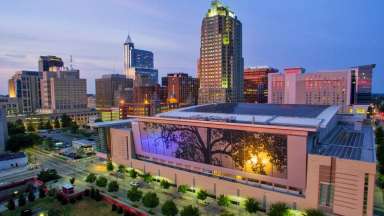
In 2026, the City of Raleigh put out an artist call to create iconic public artwork for the facade of the expanded Atlantic Union Bank Convention Center. The piece is currently in the concept design phase, but will be highly visible from the exterior and could include outdoor facade treatments, integration into the glass windows, or interior suspended sculptures.
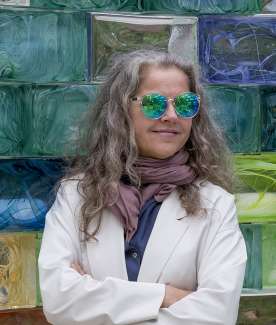
Artist Pae White was chosen to create art for the facade. A Los Angeles-based contemporary multimedia artist known for large-scale, intricate installations, tapestries, and sculptures, Pae creates art that blurs the lines between fine art, design, and architecture. Her work often explores "the spaces between things.”
Interactive Public Art on the Plaza
In 2026, the City of Raleigh put out an artist call for the creation of permanent, outdoor, interactive artwork(s) as part of the expansion of the Altantic Union Bank Convention Center. The artwork(s) will be located in future green space planned along Dawson Street. While currently in the design phase, the art will be durable experiences that encourage playful interaction, support moments of engagement for both local residents and new visitors to the City, and enhance a high traffic area. This could happen through innovative use of color, light, or materials or through thoughtful integration of amenities into artwork infrastructure.
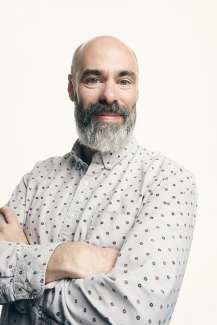
Artist Matthew Mazzota was selected for the project. Matthew received his BFA degree from the School of the Art Institute of Chicago and his Master of Science from the Massachusetts Institute of Technology’s Program in Art, Culture, and Technology. He is a TED Fellow, a Guggenheim Fellow, a Fulbright Grantee, a Smithsonian Artist in Research, as well as a Loeb Fellow at Harvard University.
Matthew works at the intersection of art, activism, and urbanism, focusing on the power of the built environment to shape our relationships and experiences. His community-specific projects integrate new forms of civic participation and social engagement into the built environment and reveal how the spaces we travel through and spend our time living within have the potential to become distinct sites for intimate, radical, and meaningful exchanges. Through his process, each project starts by creating temporary public spaces for listening—an Outdoor Living Room—as a way to capture voices from local people who might not attend more formal meetings. Stemming from this approach are experiences that involve people from a range of backgrounds working together to redefine their collective identity.