
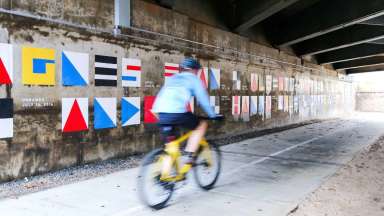
The City of Raleigh is seeking artists to create public art at recently completed stormwater projects. Eight semi-finalists will be paid $250 to create a concept design proposal and the selected finalists will receive $11,500 per assigned location (with the possibility of receiving multiple locations).
Applications are due January 15 at 11:59pm.
Eligibility
This opportunity is open to individuals and teams who live or work in North Carolina.
Applicants must be legally authorized to work in the United States and have unexpired documents that establish employment eligibility.
Applicants must be at least 18 years of age.
Applicants must have at least a three-year history of professional practice.
Applicants must have demonstrated experience in design through the creation of high-quality work.
Budget
Semi-finalists will receive $250 to create a concept design proposal.
Selected Finalist artist/artist team will receive $11,500 per assigned site (with the possibility of being assigned multiple sites). The budget is inclusive of design, artwork installation, taxes, travel, and fees.
Project Overview
Green Stormwater Infrastructure (GSI) uses natural and built landscape features to capture stormwater runoff and filter out pollutants that would otherwise go to storm drains and streams. You can learn more about the overall project and green stormwater infrastructure here. You can learn more about stormwater runoff and how pollutants impact the health of our streams here.
In 2026, Raleigh Stormwater and Raleigh Arts collaborated with the artist team A Gang of Three on a Stormwater Arts Vision Plan. The plan identified and designated future opportunities for site-specific educational installations and projects to raise awareness about the city’s stormwater infrastructure and management systems. Potential strategies highlighted in the plan include:
- Revealing hidden water (underground streams and aquifers, floodplains);
- Revealing hidden networks (lakes, streams, watersheds and designed aspects of our stormwater management system);
- Creating an ecosystem of connected projects;
- Creative engagement to draw the public in and create connections about our relationship to water; and,
- Leveraging “free stuff” (sightlines, topography, light/shadow, stopped traffic) to do more with less in more places.
The creative displays created for this project will help implement that plan by providing designs that teach residents about the impacts of flooding, ecological benefits, and the importance of healthy streams.
Project Goals and Artist Opportunities
the goal of these projects is to educate residents about stormwater and stormwater infrastructure through art and design. Through impactful visuals, visitors to these sites will learn about the important safety and ecological benefits of stormwater management.
Artists are encouraged to consider mounting artwork on existing surfaces such as fences, retaining walls, and railings.
Vertical artwork is preferred, but some ground-plane artwork can be considered
Artwork should be semi-permanent with a 10-year lifespan
Artists are encouraged to use durable and semi-permanent materials such as cut and painted metal or printed aluminum signs.
Designs should be eye-catching and educate residents about stormwater infrastructure, management, and safety.
Creative Education Display Locations
The selected artists will be assigned one or more locations to create an educational display. The potential sites include:
Peterson Street Bioretention Area
The Peterson Street Bioretention Area is 500 square feet and captures, absorbs, and cleans stormwater runoff. The project is located along the roadway adjacent to the Walnut Creek Trail entrance at Walnut Creek Wetland Park. Their vision is to create strong, healthy, sustainable communities and ecosystems. At this site, we are looking for creative displays that connect the site’s history of environmental justice and community connection with nature-based solutions, such as the roadway bioretention area. To learn more about roadway bioretention devices, please visit this link. To learn more about the history of the site visit the park webpage.
Worthdale Park Stream Restoration and Stormwater Improvements
The City is restoring three streams and adding wetlands in Worthdale Park; construction is scheduled for completion in spring 2027. The three streams combined receive stormwater from approximately 175 acres of developed land, including impervious areas such as streets, rooftops, and parking lots. The project will help improve water quality by stabilizing eroded streambanks and enhancing aquatic and riparian habitat. The project also includes the creation of walking paths, a boardwalk and seating area near the restored streams. At this site, we are looking for creative displays that could inform park patrons on the importance of stream and wetland restoration. To learn more about the restoration project, visit this site. To learn more about the park and site, please visit the park webpage.
Baileywick Park Bioretention Area
In 2024, a bioretention area was installed adjacent to the new open-air pavilion. This device uses plants, soils, and engineering, to collect and filter rainwater coming from impervious surfaces, in this case the roof and surface concrete court area from the open-air pavilion. At this site, we are looking for creative educational displays that will help park patrons connect the park’s existing Green Stormwater Infrastructure with the surrounding park infrastructure and impervious surfaces. To learn more about the park facilities, visit the park website. To learn more about bioretention devices and how they function, visit this site.
Levister Court GSI to Mitigate Urban Heat Islands
In 2026, Raleigh Stormwater added a 500 square foot-roadway bioretention to Levister Court to slow down and filter stormwater runoff, while lowering temperatures on the paved sidewalk and addressing Urban Heat Island (UHI) impacts. The bioretention area features a tree, along with other vegetation, and extends under the adjacent sidewalk using suspended pavement. At this site, we are looking for creative educational displays that highlight the community and ecosystem benefits of green stormwater infrastructure beyond water treatment, such as the lowering of localized temperatures. To learn more about this project, visit this site.
Raleigh Rose Garden Bioretention Area
The Raleigh Rose Garden and Little Theater is a historical site in Raleigh that features more than 60 rose beds, an open-air amphitheater, and a bioretention device that absorbs stormwater runoff and provides water quality benefits. The bioretention device features a mix of native, ornamental grasses and pollinator-friendly flowering perennials and low shrubs. At this site, we are looking for a creative educational display that aligns with the historical nature of the park and its surrounding architecture, while educating the public on the importance of green stormwater infrastructure. To learn more about bioretention devices, visit this site. To learn more about the history of the park, visit the Rose Garden website or Storymap.
Project Timeline
| Semi-finalists selected | January, 2027 |
| Semi-finalists submit proposals | February 2027 |
| Finalists selected | March 2027 |
| Contract finalized * | April 2027 |
*One or two of the projects may delay contracting/design until Autumn 2027
| Concept design | Spring 2027 |
| Final design | Summer 2027 |
| Artwork installation | Summer-Fall 2027 |
Selection Criteria and Process
Applications submitted in response to this RFQ will be reviewed by the City of Raleigh Public Art Director, who will then forward all complete and eligible applications received by the deadline to the Artist Selection Panel. The Panel may include a member of the City of Raleigh Arts Commission, a member of the Stormwater Management Advisory Commission, community members, artists and arts professionals, City Staff, and other stakeholders.
The Artist Selection Panel will evaluate the qualifications of artists based on the following criteria: artistic merit, cultural and social relevance, and appropriateness for the project.
After reviewing portfolios, the Selection Panel will select as many as eight semi-finalists and ask them to create concept design proposals.
How to Apply
Apply online.
Those wishing to be considered must submit the following materials:
- Statement of Interest
- How your work might translate to this project, preferred sites (if any), and experience you have working on public projects. You can submit this information as either:
- A brief statement (250 words or less) outlining your project idea.
- Or A one minute or less audio or video clip. We will only play the first minute of audio for the panel.
Professional References
Three professional references including name, email and phone number.
Previous Work, Digital Images
Five images of recent work. Each image should include: title, year, media, location, project budget, dimensions, collaborators or design professionals (if applicable). You can also choose to submit renderings/sketches of how your work could translate to a public project.
Do not provide or submit any other materials with your application. They will not be reviewed by the panel and will not be returned.
Submission Deadline
Applications should be submitted through Slideroom and are due on January 15 date, at 11:59pm.
About
About Raleigh Stormwater
Raleigh Stormwater implements programs, projects, and services to maintain stormwater infrastructure, protect water resources and aquatic life, prevent streambank erosion, mitigate development impacts, and manage flooding. We collaborate with internal and external stakeholders to identify, communicate, design, and construct stormwater projects, programs, and policies to serve the Raleigh community.
About Raleigh Arts
Raleigh Arts is the City's hub for public art, community arts programming and organizational support for the cultural sector. Raleigh Arts also oversees the Pullen and Sertoma Arts Centers and manages several exhibition spaces as well as the Municipal Art Collection. We work to ensure every resident has access to the arts and support our local creative community
Non-Discrimination Policy
The policy of the City of Raleigh is, and shall be, to oppose any discrimination based on actual or perceived age, mental or physical disability, sex, religion, race, color, sexual orientation, gender identity or expression, familial or marital status, economic status, veteran status or national origin in any aspect of modern life. The City of Raleigh Arts Commission strives for a diverse representation of voices, life experiences, views, and interests to reflect the collaborative community we have and wish to serve.
Additional Information
For questions, contact Public Art Project Manager Jenn Hales.
For relevant information regarding the project, visit the Raleigh Arts website.