Jump To:
Rain Gardens and Bioretention Areas
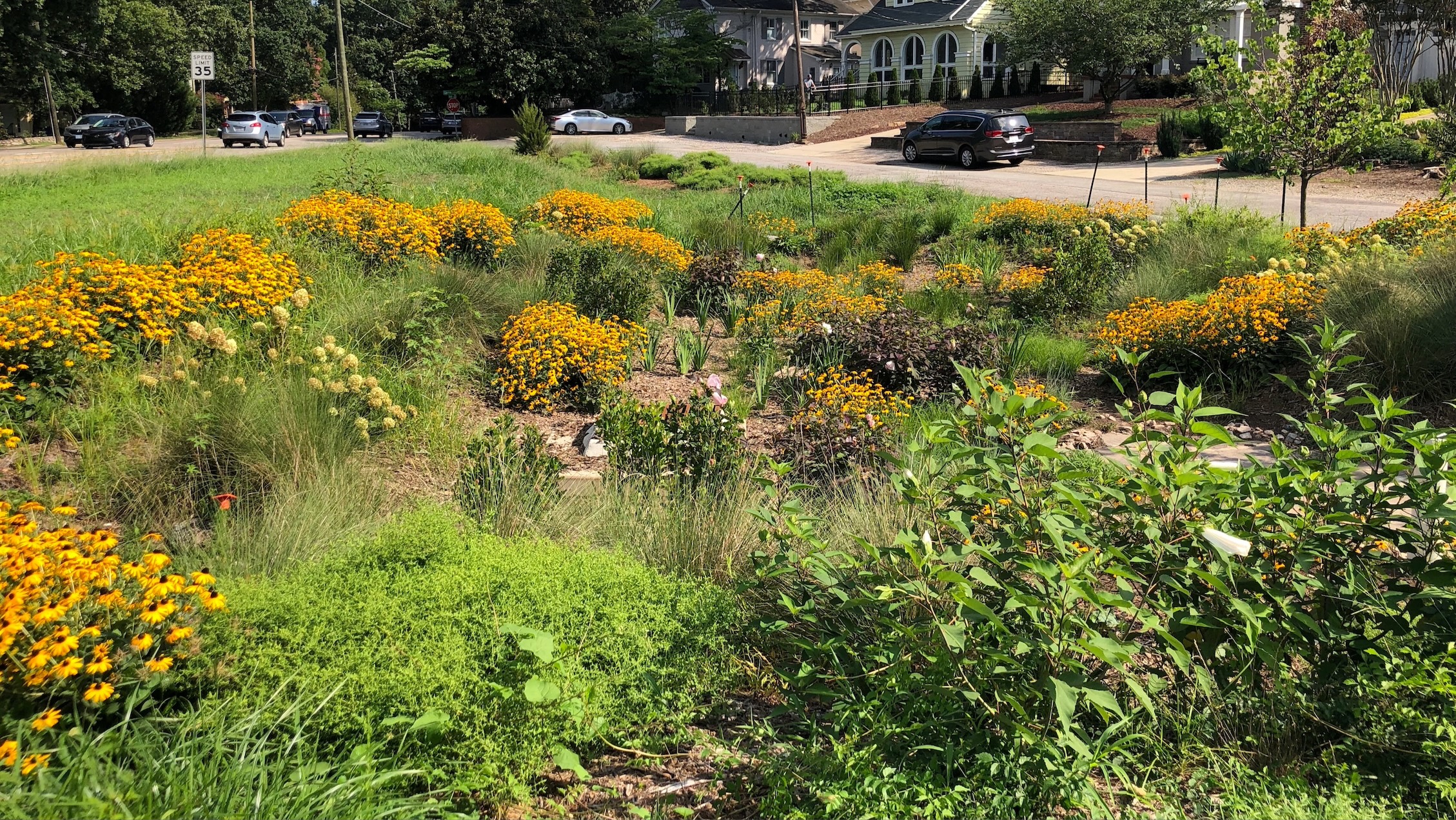
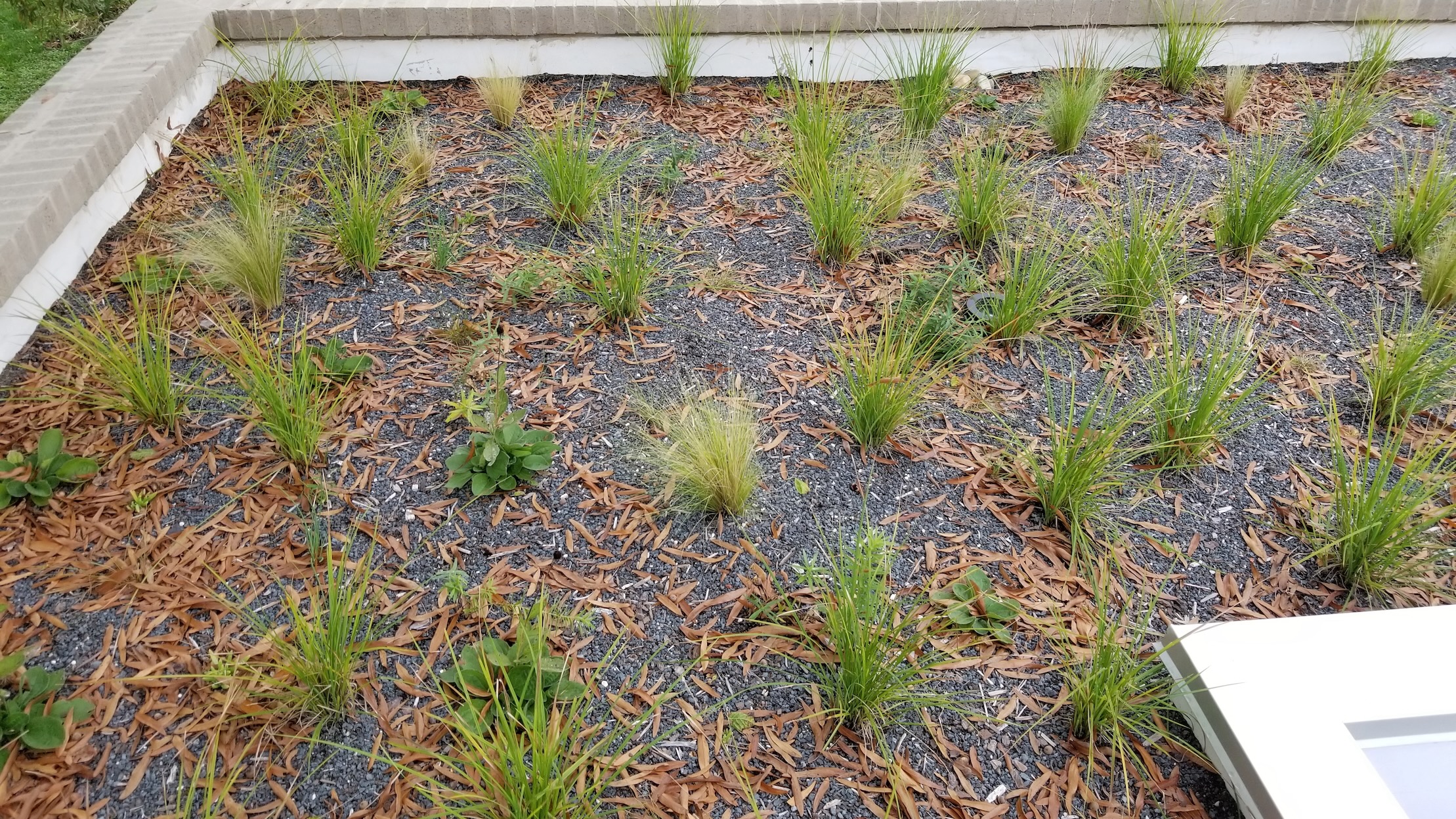
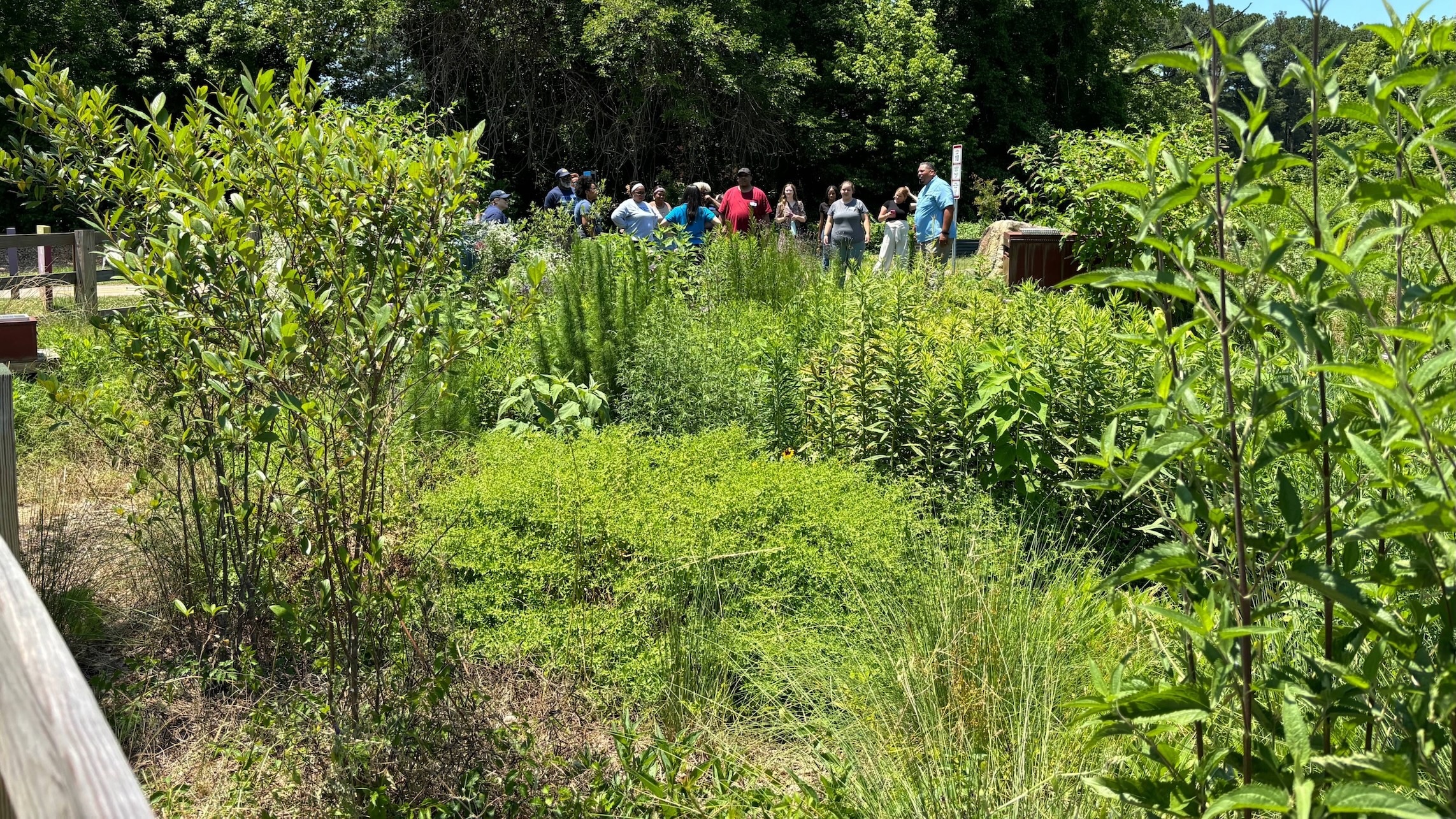
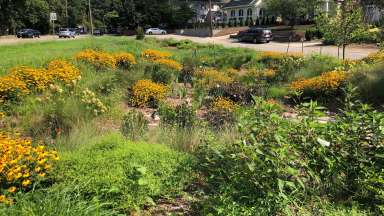
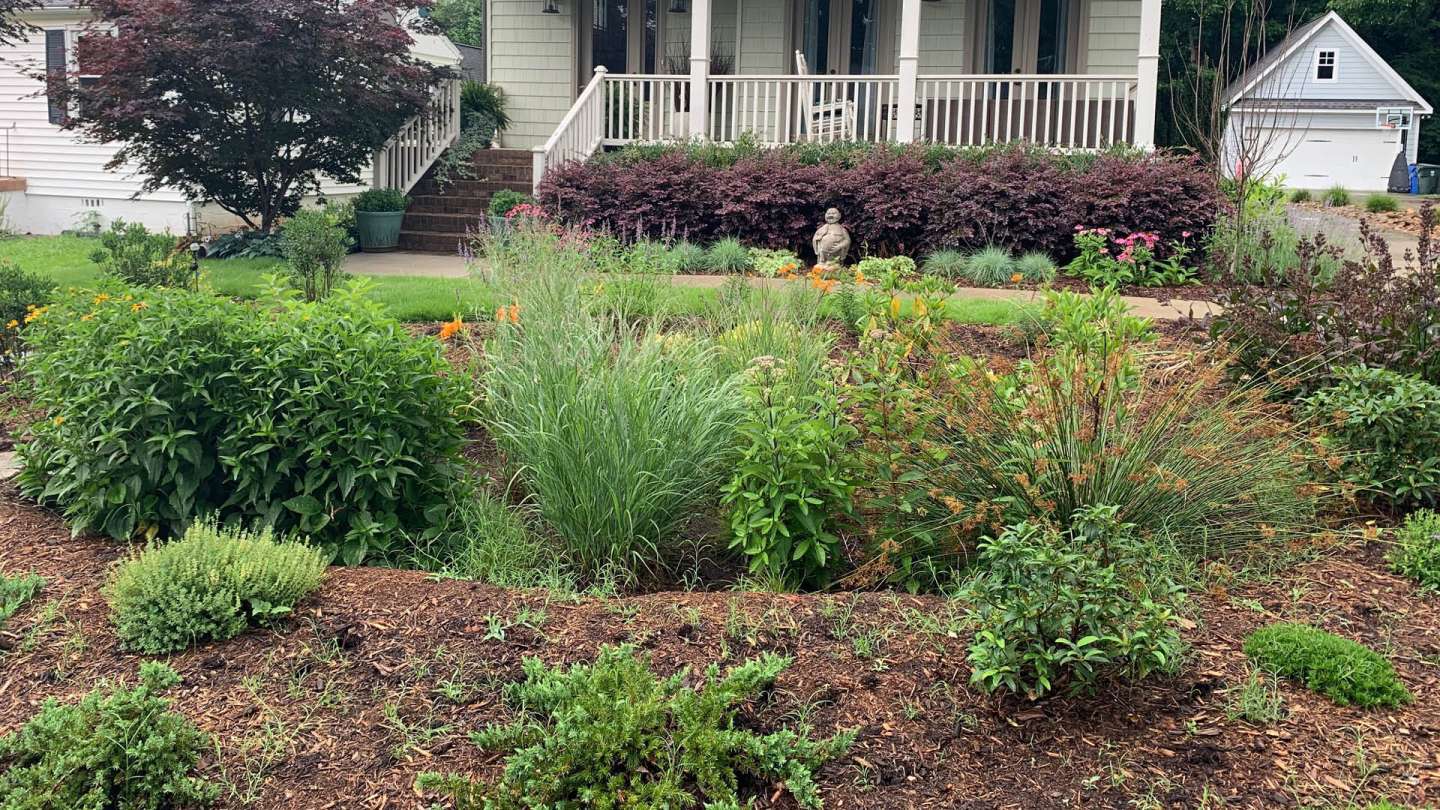
A rain garden is a planted green stormwater infrastructure (GSI) that collects and cleans rainwater coming from impervious surfaces, like roads, sidewalks, roofs, driveways and patios. The plants and soil in the garden slow down the water and filter out pollution before it reaches a storm drain or creek. A bioretention area is a more engineered feature. You will see these on road and commercial projects and can typically include risers and outlet structures.
Best Location
- Flat areas downhill of impervious surface that will be treated
- Where water naturally flows to a stream or the stormwater system
- In soils that quickly absorb water
- Placed at least 10 feet away from a building
- There are several North Carolina native plants that work well in rain gardens. Learn more about their characteristics and benefits.
Cisterns
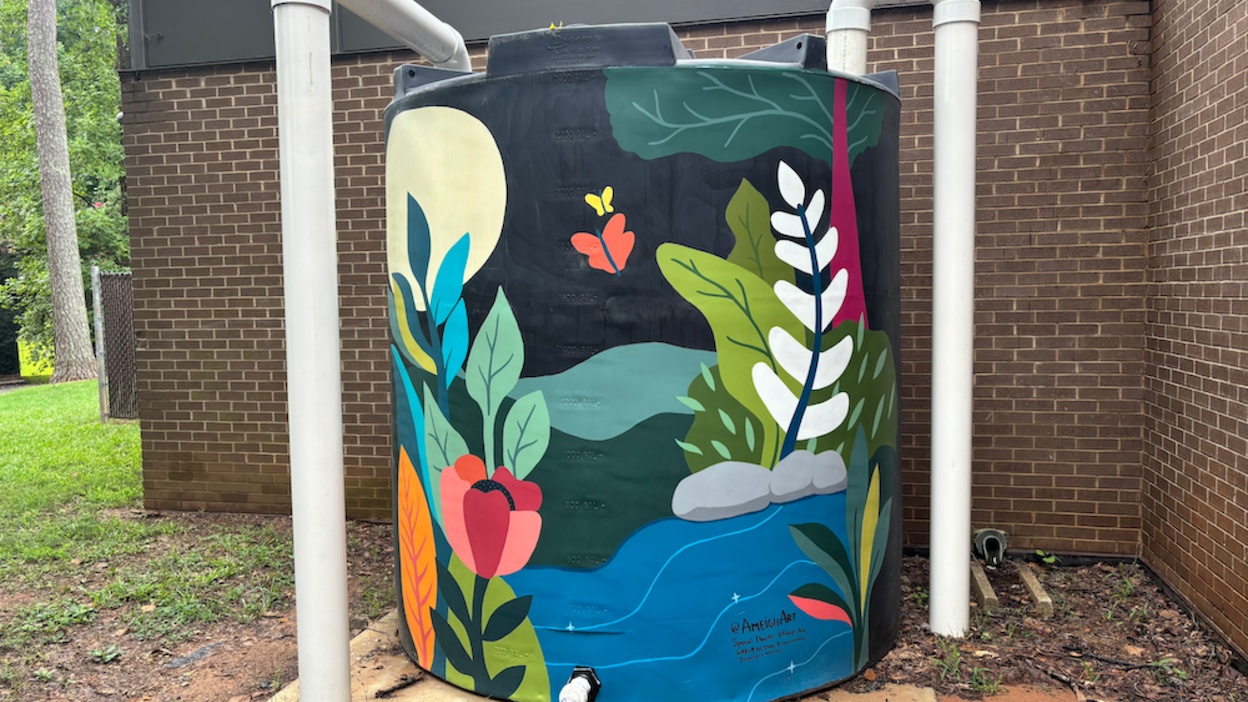
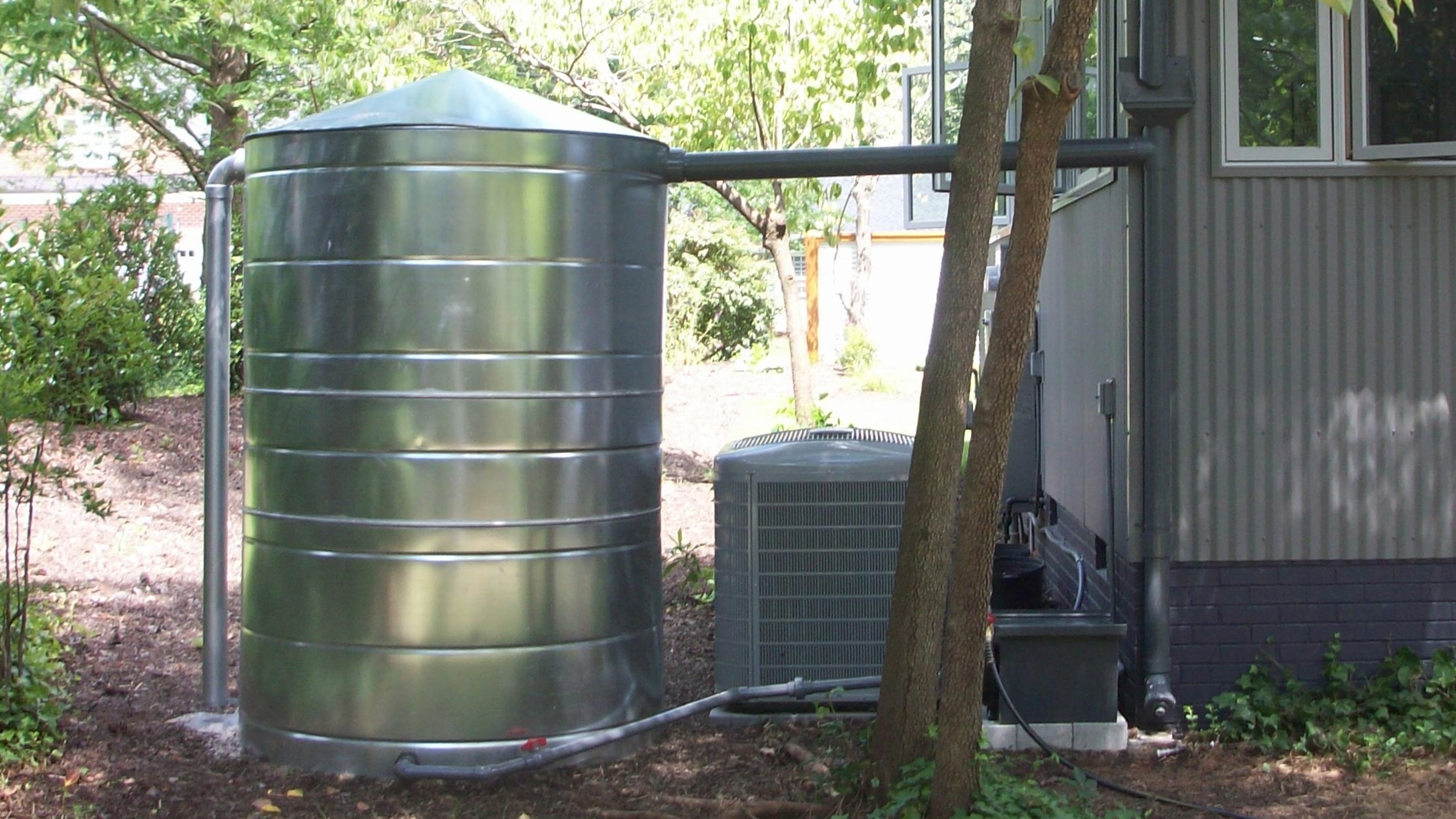
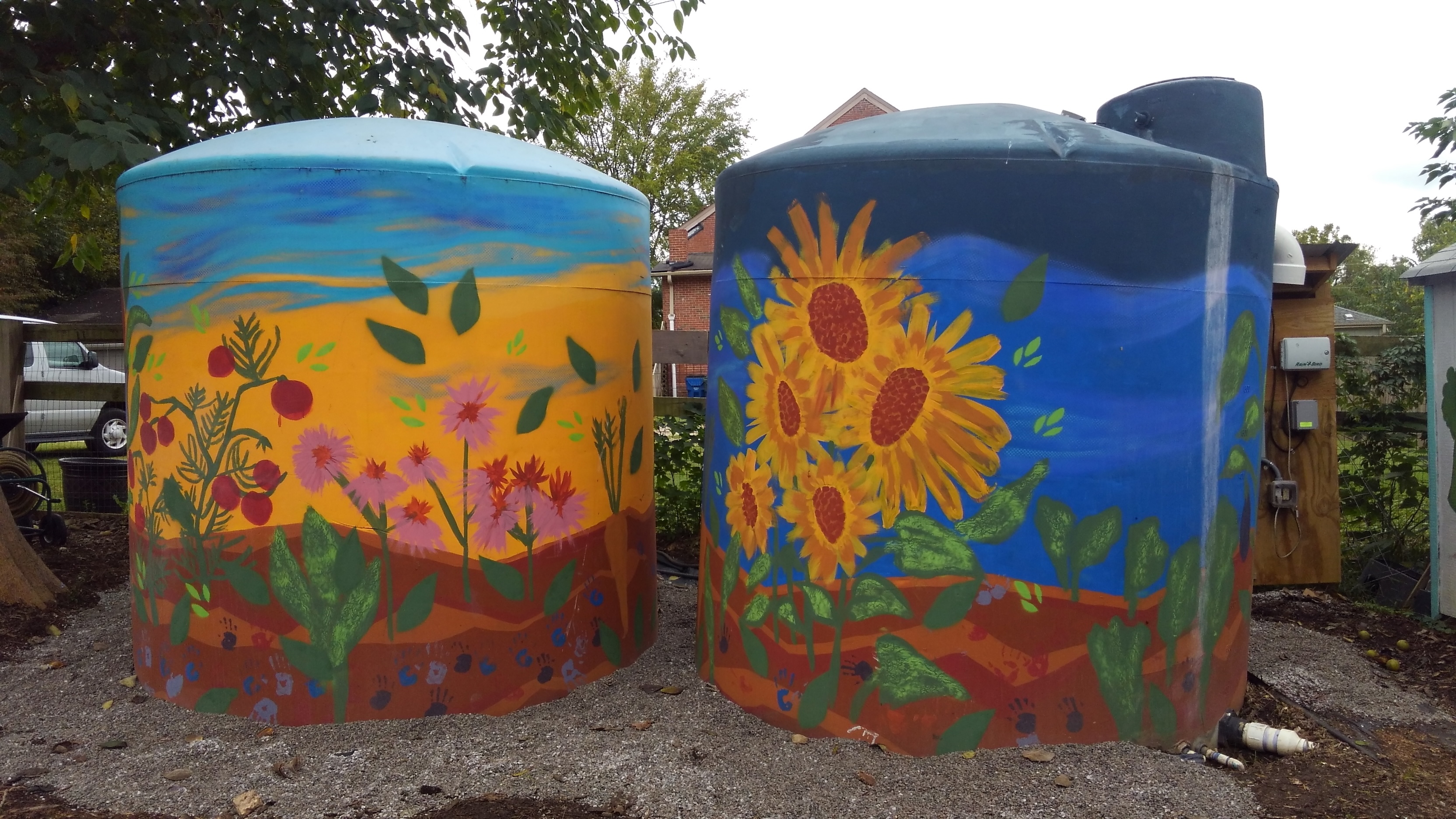
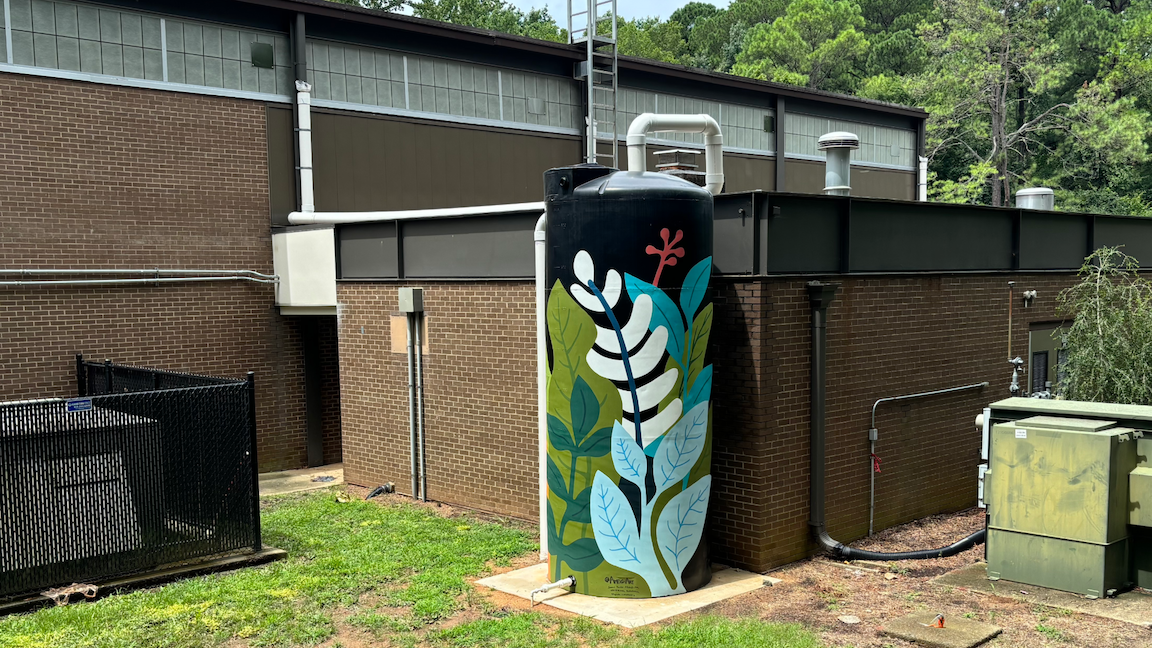
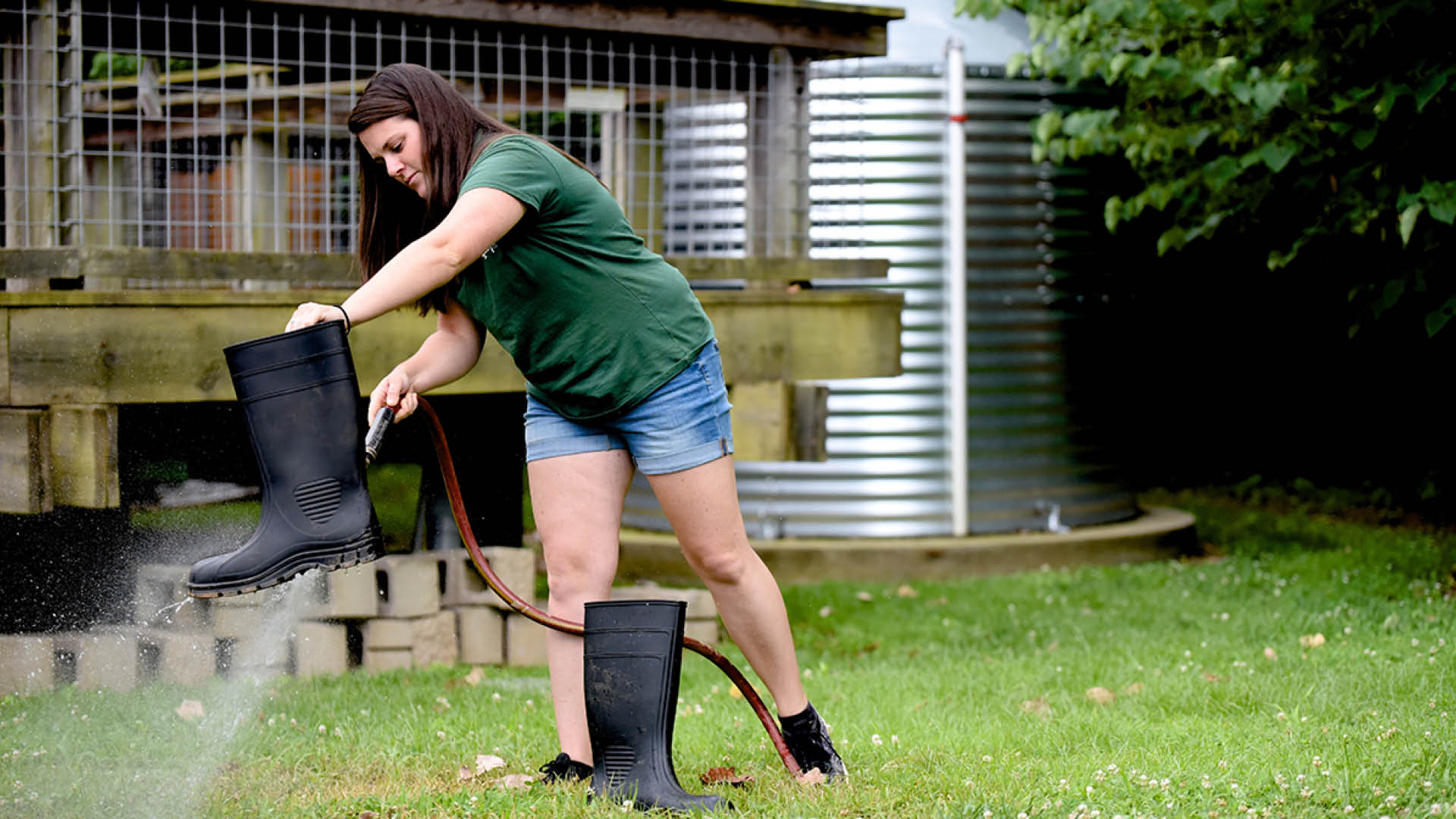
Cisterns capture and store rainwater that flows from buildings and rooftops. The water stored in a cistern is good for washing cars, gardening, and irrigation. Cisterns are a low-cost GSI and a great option to store and reuse water and protect the environment. Watch the video below to learn about one of our installed cisterns!
Best Location
- Flat, level area
- Cisterns vary in size - good for small or large properties
- Near a hose or pump that you can connect to the cistern or water system
Green Roofs
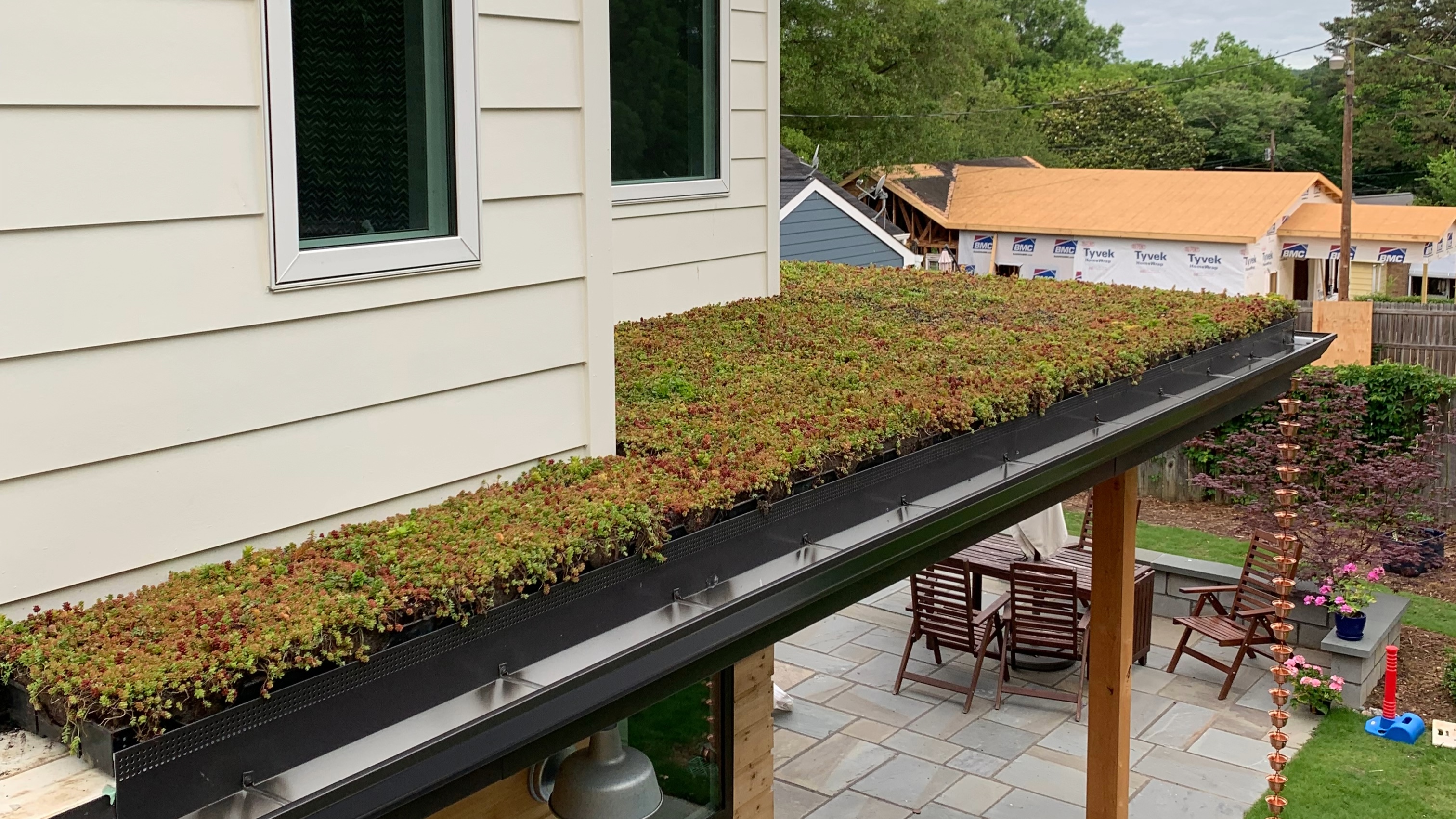
Plants on a green roof slow down rain, absorb into the soil, or evaporate into the air. The roots of the plants keep the soil in place as it removes pollution from the water. Together, plants and soil reduce how much stormwater runoff reaches the ground, storm drains, and creeks. Green roofs also lower heating and cooling costs and provide wildlife habitat.
Best Location
- Sunny, horizontal spaces with a minimal slope
- On a building that can support the weight of a green roof
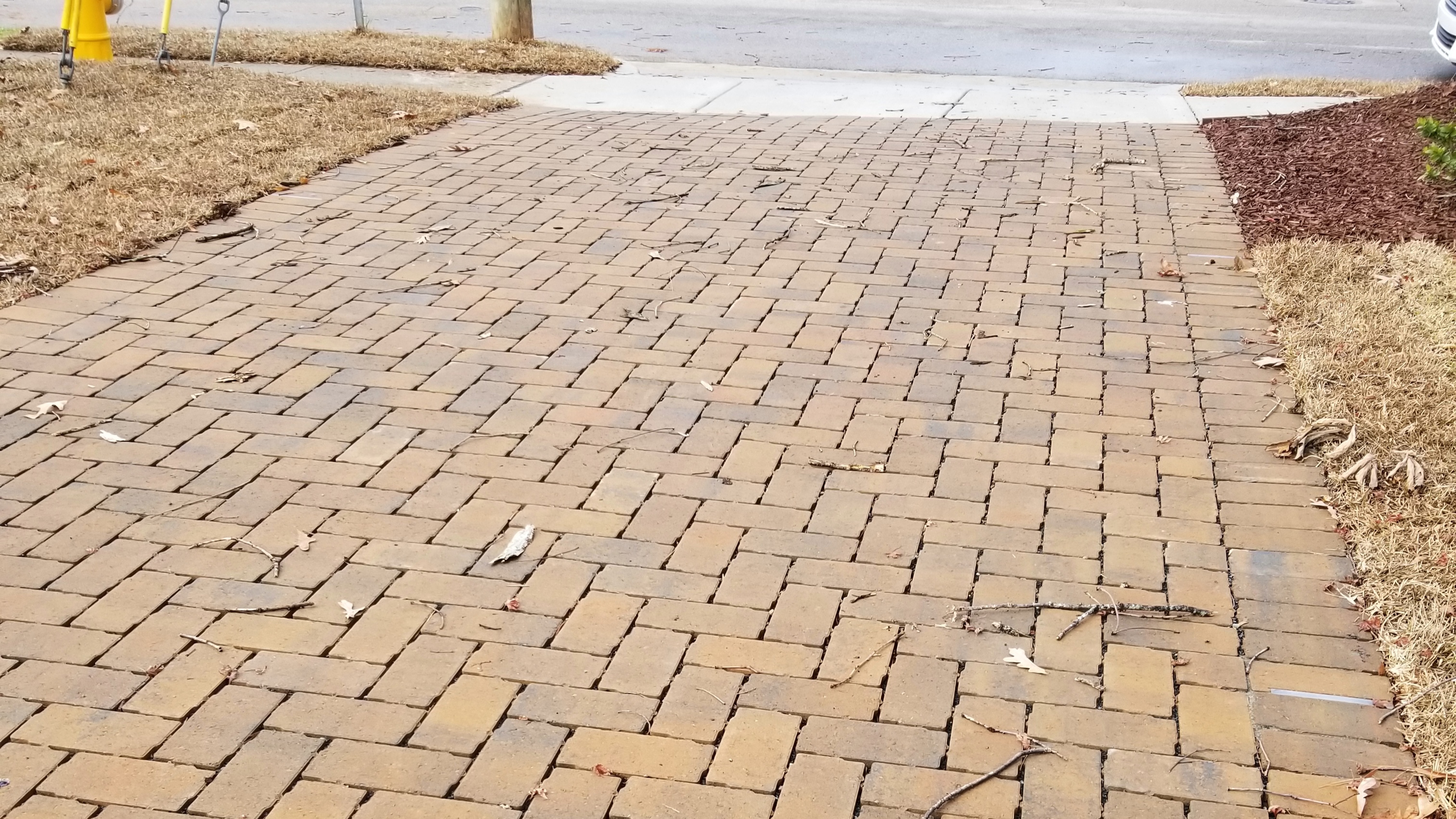
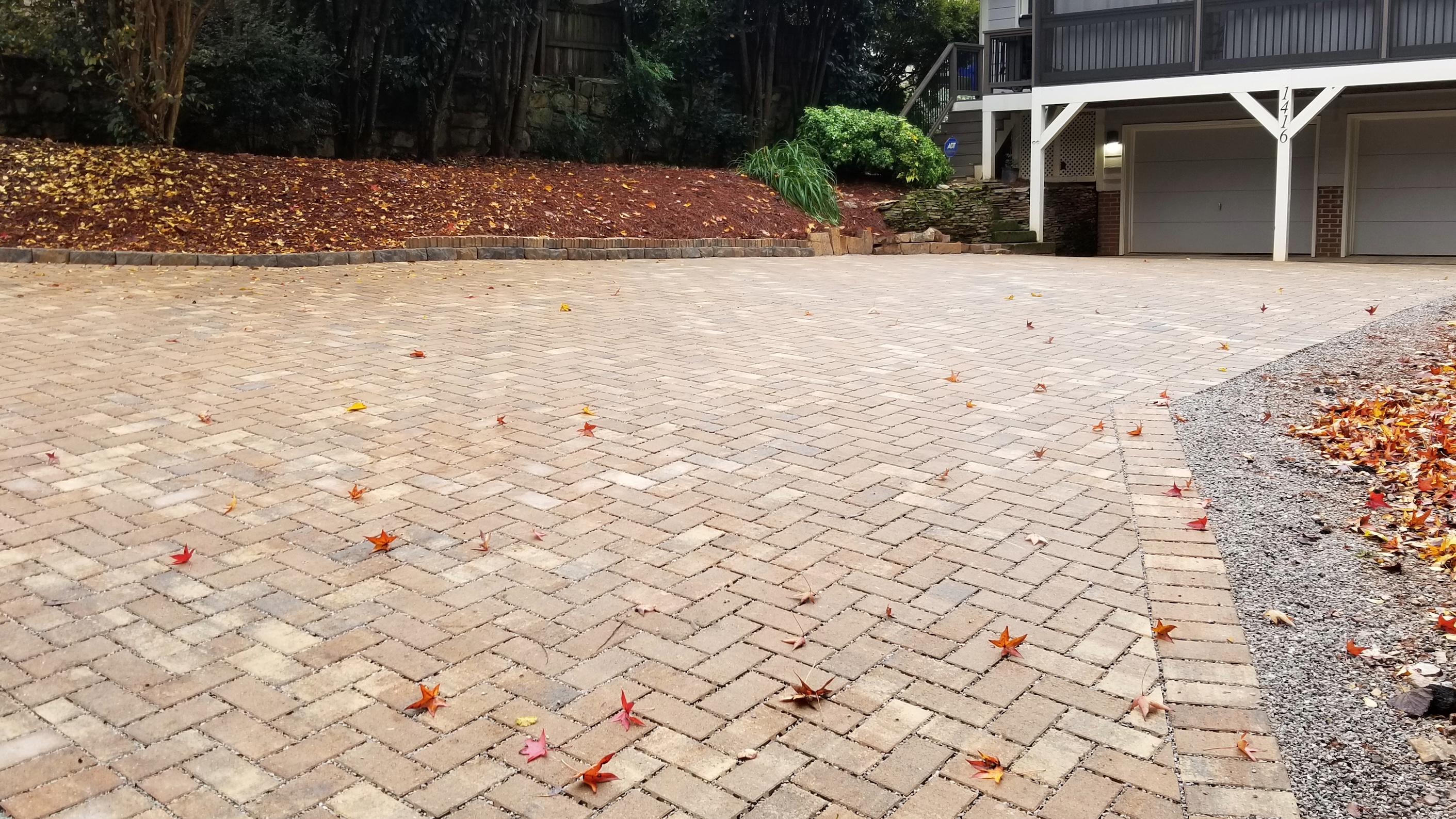
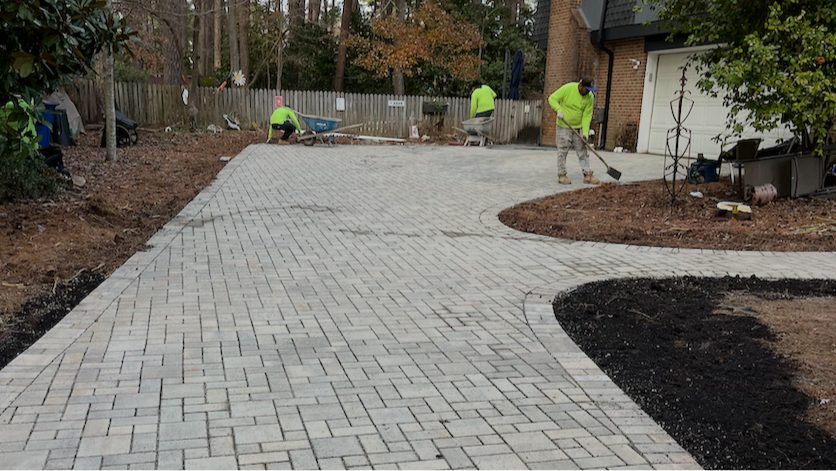
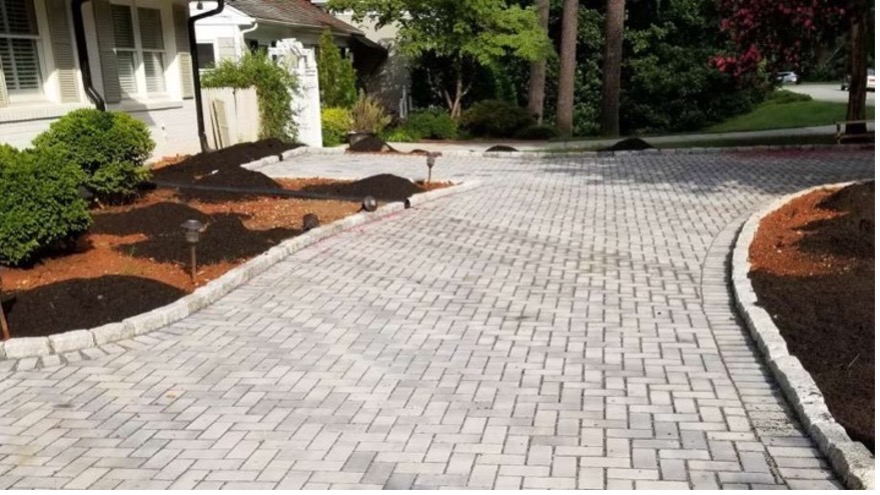
Permeable Pavement
Permeable pavement spreads out stormwater, soaks it into the ground, and slows it down.
Best Location
Permeable pavement works well on driveways and walkways that have:
- Flat areas with less than a two percent slope (two-foot drop in elevation for every 100 feet);
- Soil with a high infiltration rate (allows water that is temporarily stored in the pavement to soak into the ground);
- Little tree cover – tree roots or overhanging tree canopy can negatively impact the pavement; and,
- Areas that do not have underground utilities.
Constructed Wetland
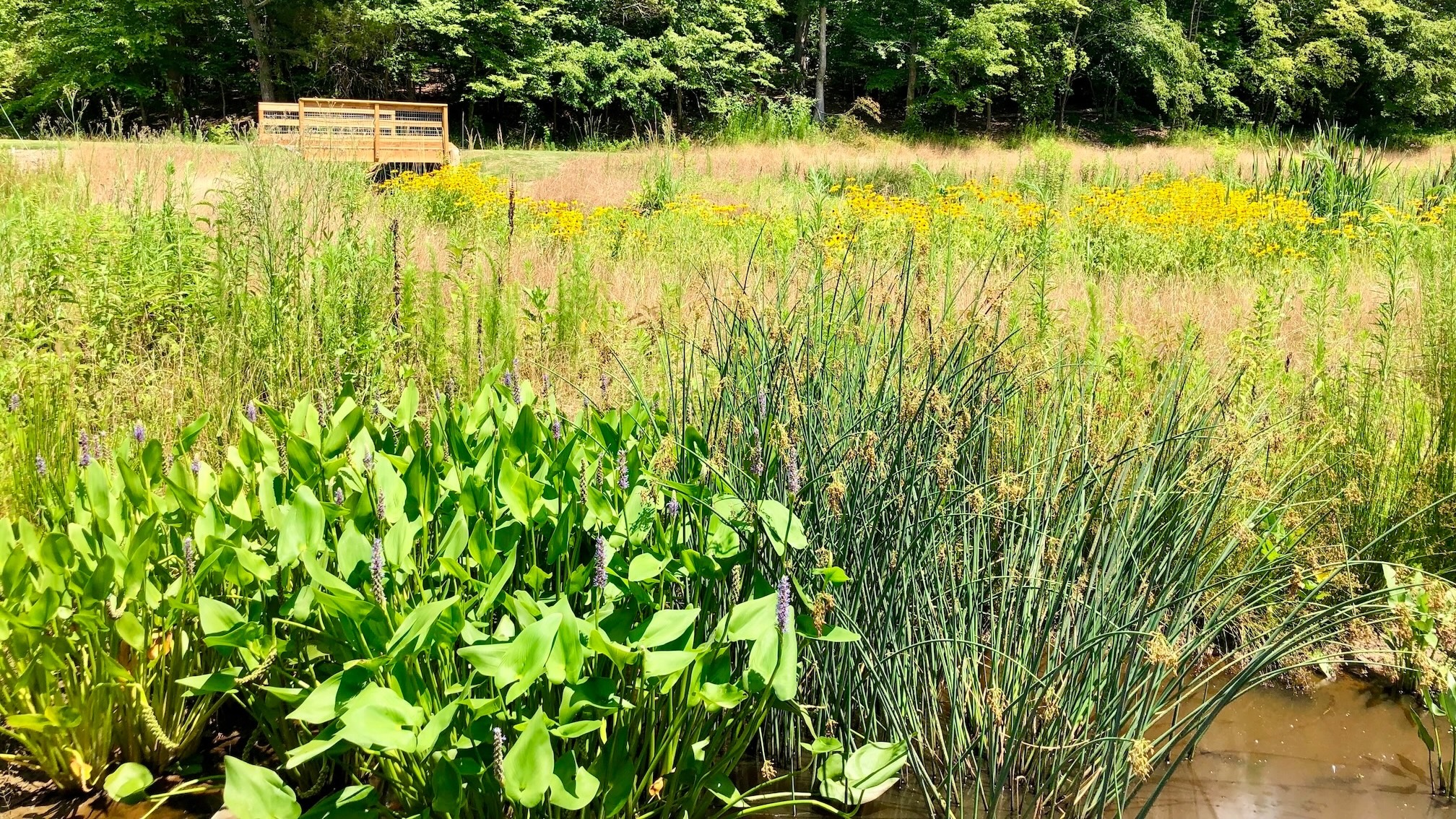
A constructed wetland or water garden is a large, planted area between dry land and a stream that's covered in shallow water. Plants that thrive in wet conditions filter out the pollution carried in stormwater runoff that enters this area. Wetlands create healthy ecosystems for wildlife, improve water quality, and store stormwater runoff.
Best Location
- Low-lying land that's wet year-round
- A lot of sunlight to support the plants
- Good for open space near a stream, creek, or river
Suspended Pavement Systems
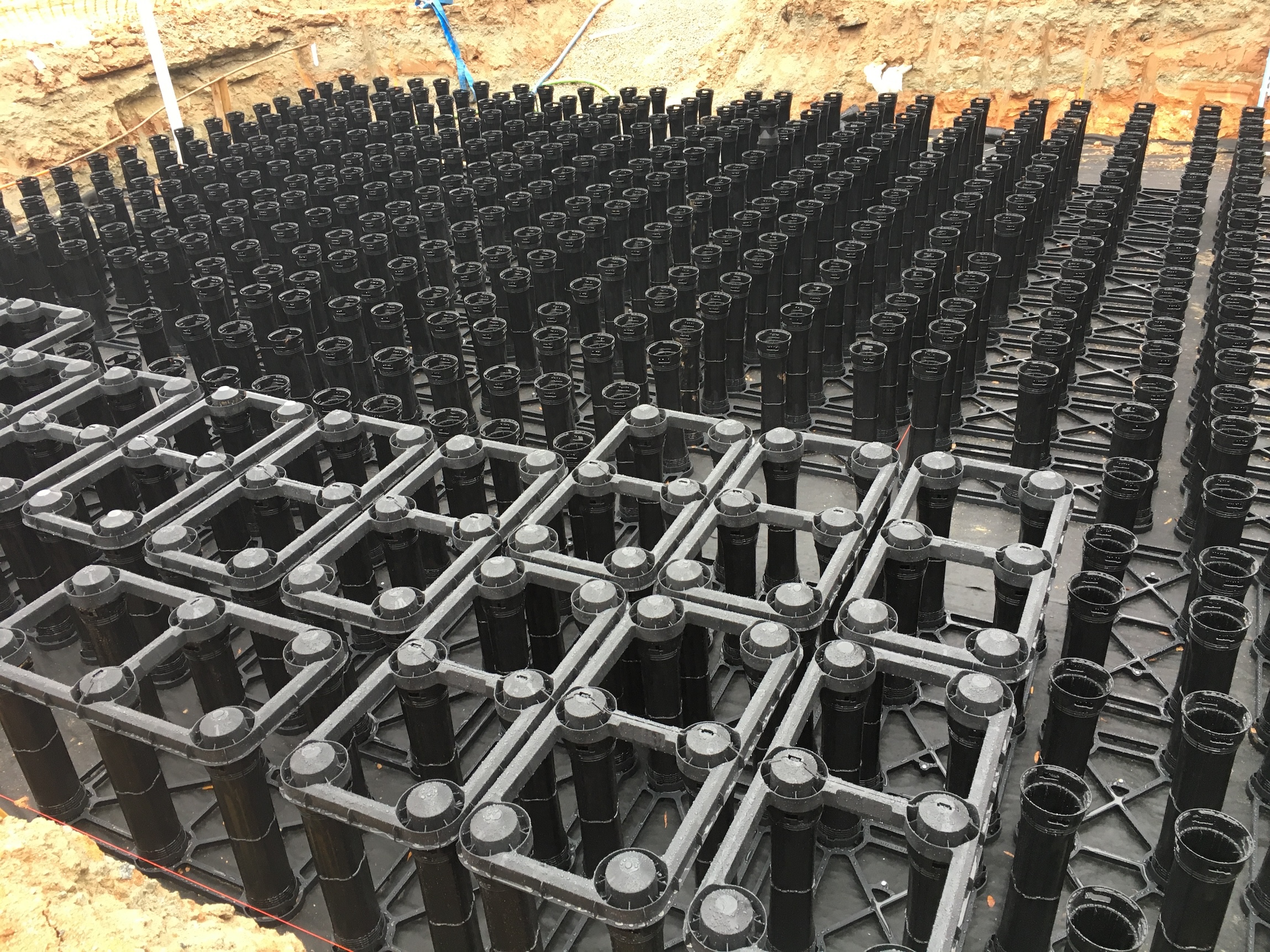
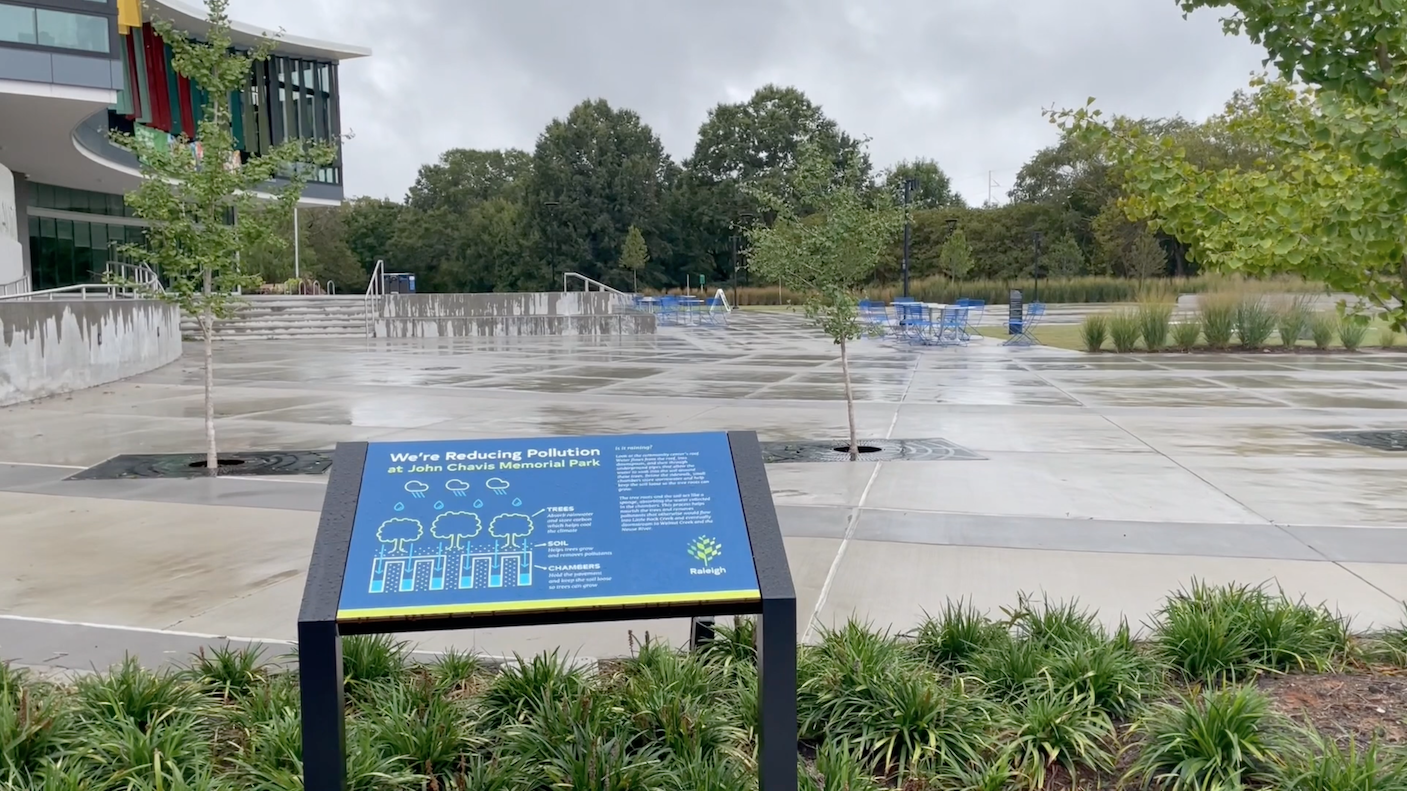
The underground stormwater device captures rainwater from roadways, roofs, and other impervious surfaces. Stormwater runoff then drains into the soil where the tree roots help remove pollutants.
GSI Video Series
Watch videos of GSI projects below to learn more about how they work and how they benefit the city!
Bioretention Area on Glenwood Avenue Protects Crabtree Creek

Using a Community Cistern at Inter-faith Food Shuttle
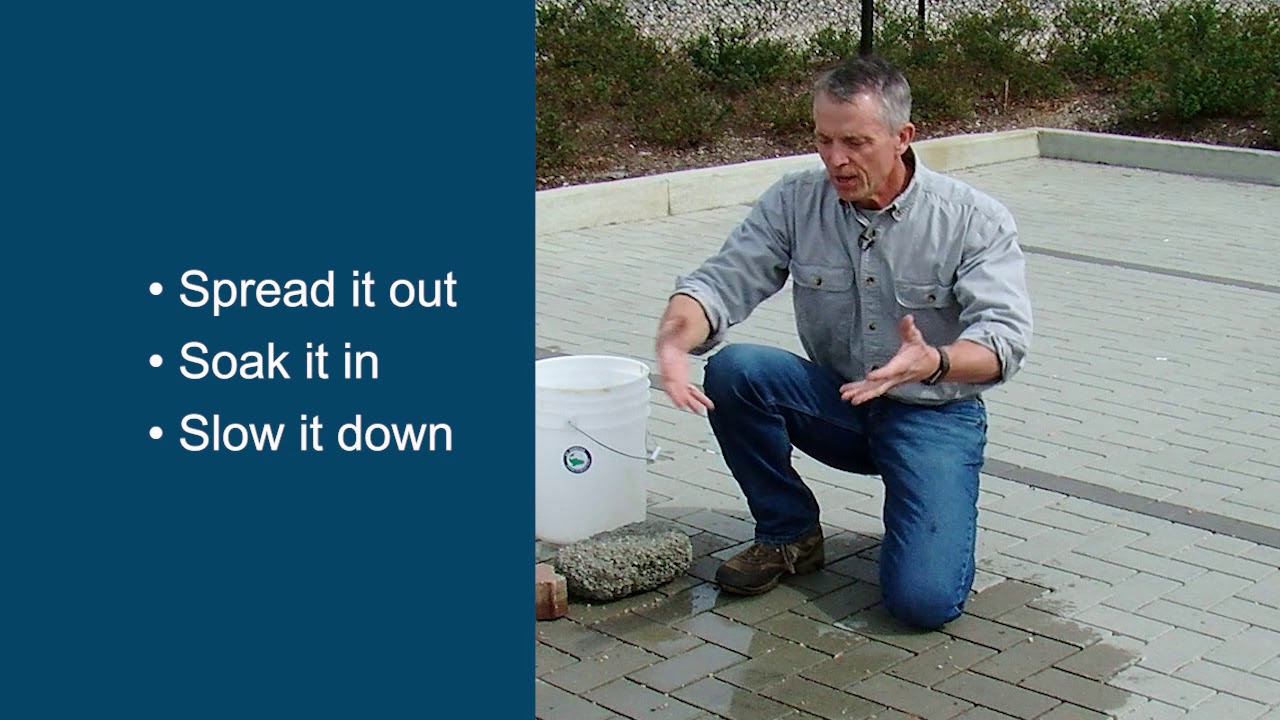
What is permeable pavement?
Bioretention Area on Glenwood Avenue Protects Crabtree Creek
Using a Community Cistern at Inter-faith Food Shuttle