
Staff Stream Monitoring

Monitoring Water Quality in Streams

Protecting Stream Health and Aquatic Life


Jump To:

 
Aquatic Insect Samples Protect Critters Living Near Streams
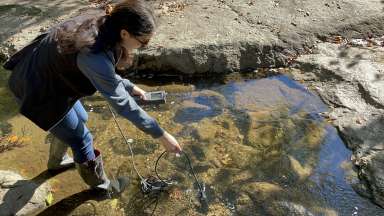
We collect water samples at 18 stream locations every three months to monitor stream health and how streams change over time. Each location is a major tributary or stream that flows to the Neuse River. We use water quality meters to take samples and read chemical data. Stream monitoring is also a requirement of our stormwater permit.

See where we're monitoring | You can help us monitor streams!

Watch our stream monitoring video below!

Tracking Stream Health in Raleigh

Staff checks on 18 stream locations throughout the year. See what they look for at each visit. 

What We MeasureWhat's Analyzed at the Lab
  • Water temperature
  • Conductivity
  • Salinity
  • pH
  • Dissolved oxygen
  • Total suspended solids
  • Nitrogen and phosphorus
  • Turbidity 
  • Total hardness
  • E. coli 
  • Metals (calcium, copper, magnesium, zinc)

Aquatic Insect Samples

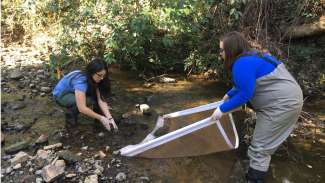
Stormwater staff in a stream collecting bug samples with a net

Staff using a kick net to collect insect samples.

Benthic macroinvertebrates are insects that live in streams. They include worms, snails, clams, and crayfish. Insect samples are taken at 22 stream locations once a year. We use kick nets and D-nets to collect and study the insects.
Did You Know?

Benthic macroinvertebrates are large enough to see without a microscope. Here's a breakdown of the meaning:

  • Benthic = bottom of a waterbody
  • Macro = large
  • Invertebrate = animal without a backbone

Water Quality Indicators

Aquatic insects are important to the food chain and don’t survive without clean water. All living creatures rely on each other and a healthy environment to live.

  1. Mayflies eat leaves, algae, decomposing plants, and other smaller organisms in a stream.
  2. Larger aquatic organisms, like darter fish, feed on these insects.
  3. Larger fish or fish-eating birds, like great blue herons, eat darter fish.
  4. As adults - mayflies are food for insect-eating birds, amphibians, and mammals that live near a stream.
  5. Larger predators, like the red-shouldered hawk, eat these animals.

Protect Critters Living Near Streams

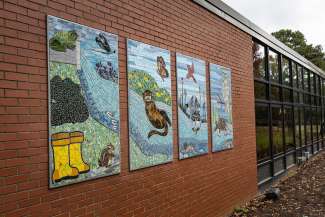
An image of the four mosaic panels attached to the community center

There’s a lot of wildlife that call streams – and the area around them – their home. It's important to keep this habitat clean. Animals and plants need clean water to survive an streams can't support healthy ecosystems if water is polluted.

Water pollution happens when stormwater runoff picks up plastics, chemicals, oil, dirt, paint, litter, and other hazardous materials as it flows to nearby streams.

Wildlife in the Streams

  • Aquatic insects (mayflies, stoneflies, and caddisflies)
  • Worms
  • Snails
  • Clams
  • Crayfish
  • Fish, like darter fish

Wildlife Around Streams

  • Mammals, like raccoons, grey foxes, beavers, and deer
  • Turtles
  • Snakes
  • Lizards
  • Frogs
  • Salamanders
  • Birds, like Blue Herons
  • Insects 

Contact


Joyce Gaffney
Environmental & Sustainability Specialist 
joyce.gaffney@raleighnc.gov
919-996-4184

Department:
Engineering Services
Related Services:
Stormwater VolunteeringSpot, Report, and Stop Water Pollution

Subscribe