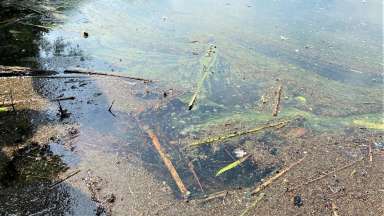
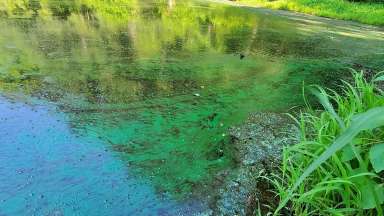
Algae growth visible on pond water.

Fertilizers

Spot It – Report It – Stop It!


Jump To:

 
Before Applying Fertilizers Nutrient Sensitive Waters

Report Stormwater Pollution

If you see stormwater pollution, call the Stormwater Helpline at 919-996-3940 or email IllegalDischarge@raleighnc.gov.

If you see or experience a water line break, contact the Raleigh Water Call Center at 919-996-3245.

Fertilizer contains nutrients that promote plant growth for our lawns and plants when applied properly. If fertilizers are applied too frequently, excessively, or before rain events, the runoff will carry excess nutrients into local waterways and may negative environmental effects like algae blooms or fish kills.

Before Applying Fertilizers

Follow these tips before fertilizing to protect our waterways.

1. Test your soil and apply fertilizers based on the label.

  • Based on your soil test results, you may not even need fertilizer
  • The label will inform proper application procedures and amounts
  • Look for a “slow-release” or “controlled release” fertilizer if possible

2. Read the fertilizer label.

  • The label will tell you how many square feet can be covered by one bag.
  • Look for a “slow-release” or “controlled release” fertilizer if possible.

3. Contain fertilizer spills and grass clippings.

  • Sweep fertilizer spills from paved surfaces and place back into the container.
  • Sweep or blow grass clippings from your walkways or driveways back onto your yard after you cut your lawn.

4. Avoid local waterways.

  • Don’t fertilize near creeks, streams, or storm drains. A good practice is to keep fertilizer about 10 feet from these waterways.

5. Pay attention to the weather.

  • Avoid applying fertilizers before or during a rain event.

6. Use mulch or natural fertilizers.

Mulch and natural fertilizers like compost provide long term and slow-release benefits that build soil health over time.

A close-up image of a pond with green algae, grass clippings, and other vegetation floating on top of the water.

A pond with green algae, grass clippings, and other vegetation floating on top of the water.

Nutrient Sensitive Waters

Raleigh participates in the Neuse Nutrient Strategy, also known as the "Neuse Rules." This effort aims to reduce the amount of nutrient pollution (like fertilizer) that flows into the Neuse River Basin.

All the waters within Raleigh flow into the Neuse River and into the Pamlico Sound, which is the largest lagoon along the East Coast of the United States and has excess concentrations of nutrient pollution from wastewater, stormwater, and agricultural sources.

Contact


Zachary Poole
Illicit Discharge Coordinator 
IllegalDischarge@raleighnc.gov
919-996-3940

Department:
Engineering Services
Related Services:
Spot, Report, and Stop Water Pollution

Subscribe