
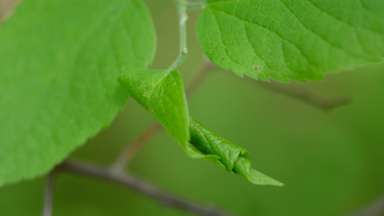
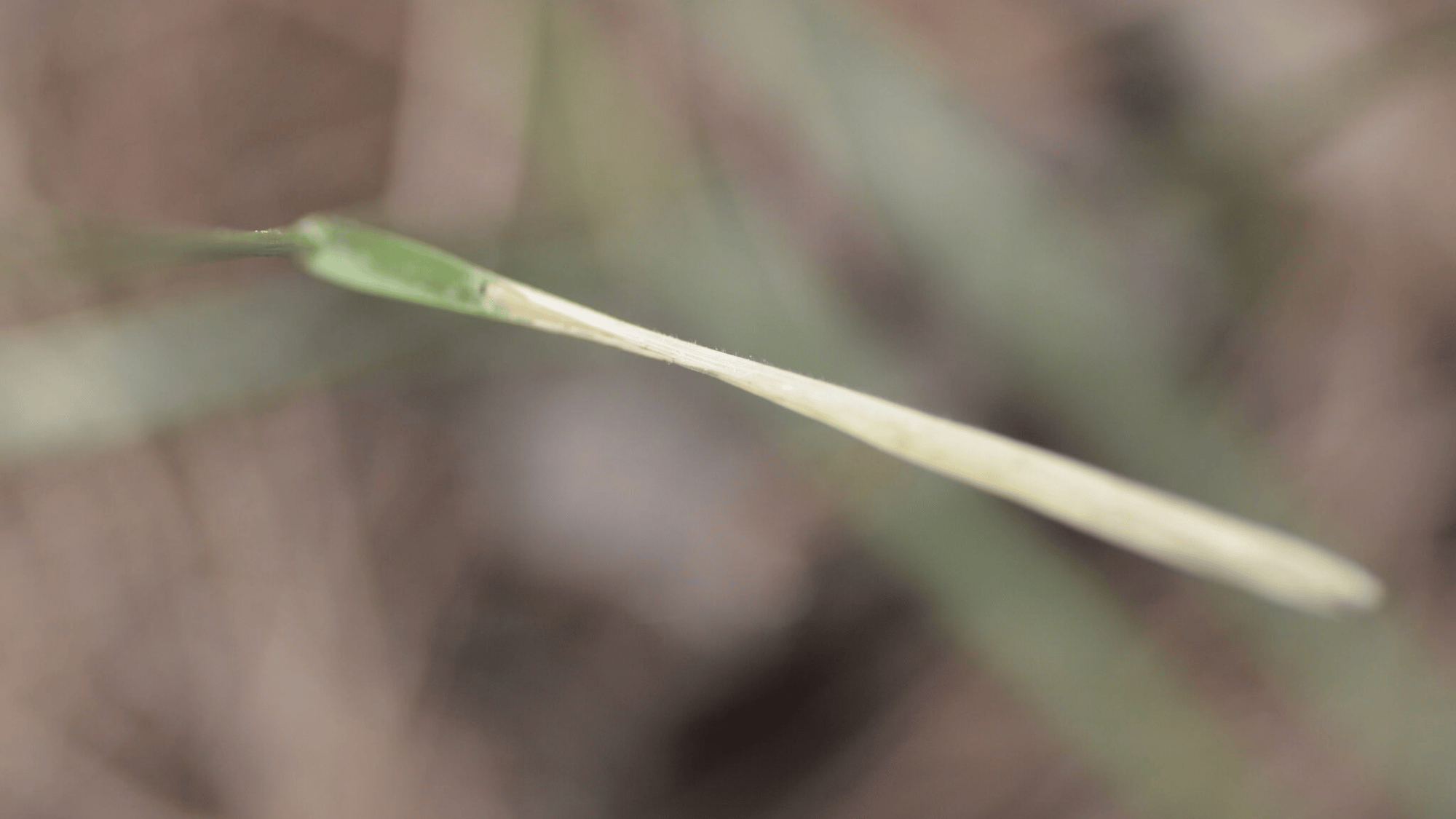
Figure 1a. A folded leaf of Twoflower Melicgrass (Melica mutica) with evidence of larval feeding inside by a Bog Lygropia Moth (Lygropia rivulalis) caterpillar
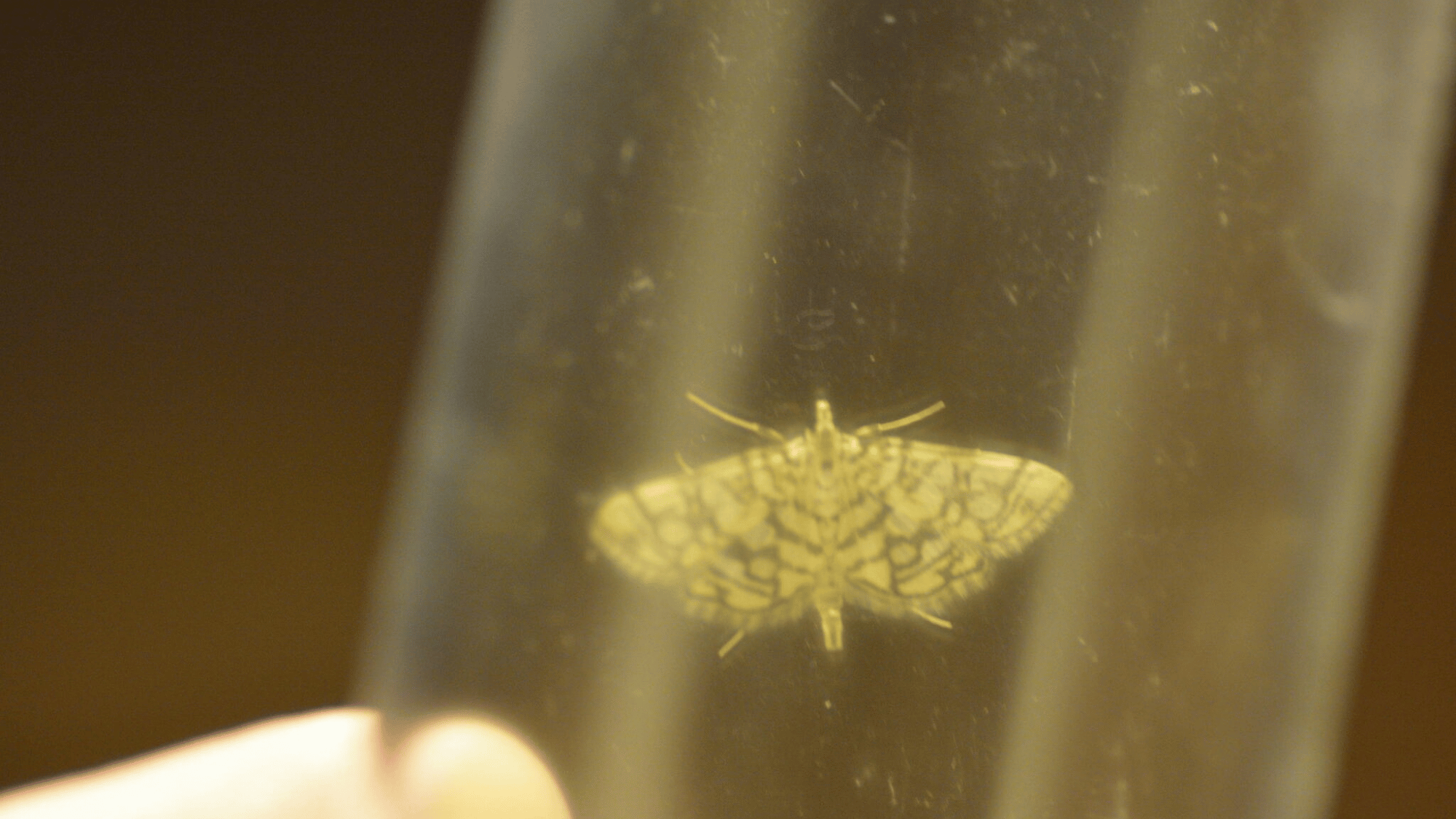
Figure 1b. An adult Bog Lygropia Moth that had just emerged inside a small container.
Here are two relatively recent examples involving leaf-tying moths from Durant Nature Preserve. In one case, I found blades of a spring-blooming grass called Twoflower Melicgrass (Melica mutica), that were folded down at the middle, then sewed into place to make a half-length narrow shelter with a caterpillar feeding inside. I collected some and kept them until the insect pupated, then a pretty brown and white moth with ring-like net patterns on the wings emerged: a Bog Lygropia moth (Lygropia rivulalis)—see Figures 1a and 1b. It turned out that its early life was previously unknown. It might eat more than just Melicgrass, but that’s all we know so far.
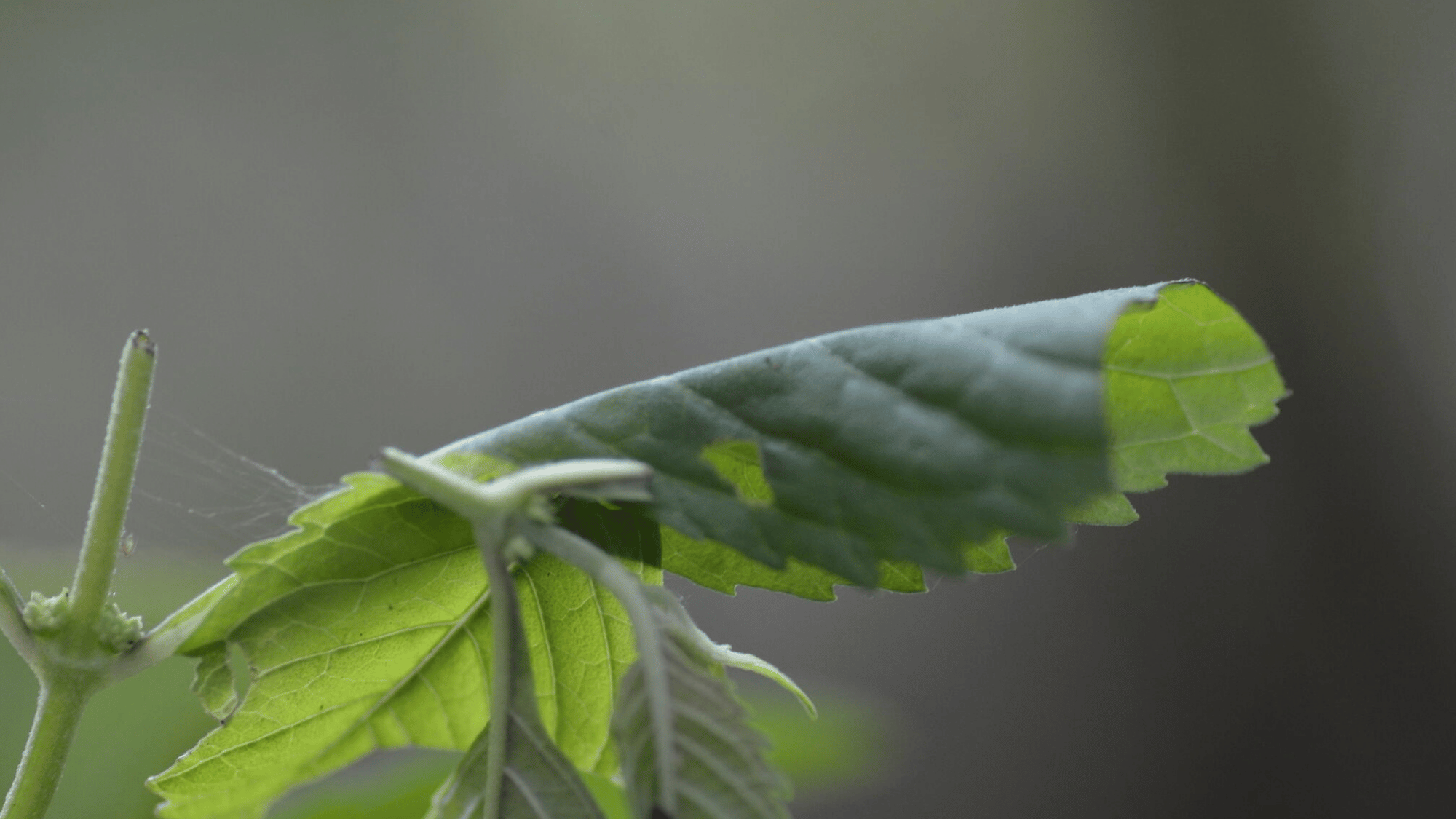
Figure 2a. Leaf of Virginia Bugleweed (Lycopus virginicus) tied by the Bicolored Mint Moth (Pyrausta bicoloralis).
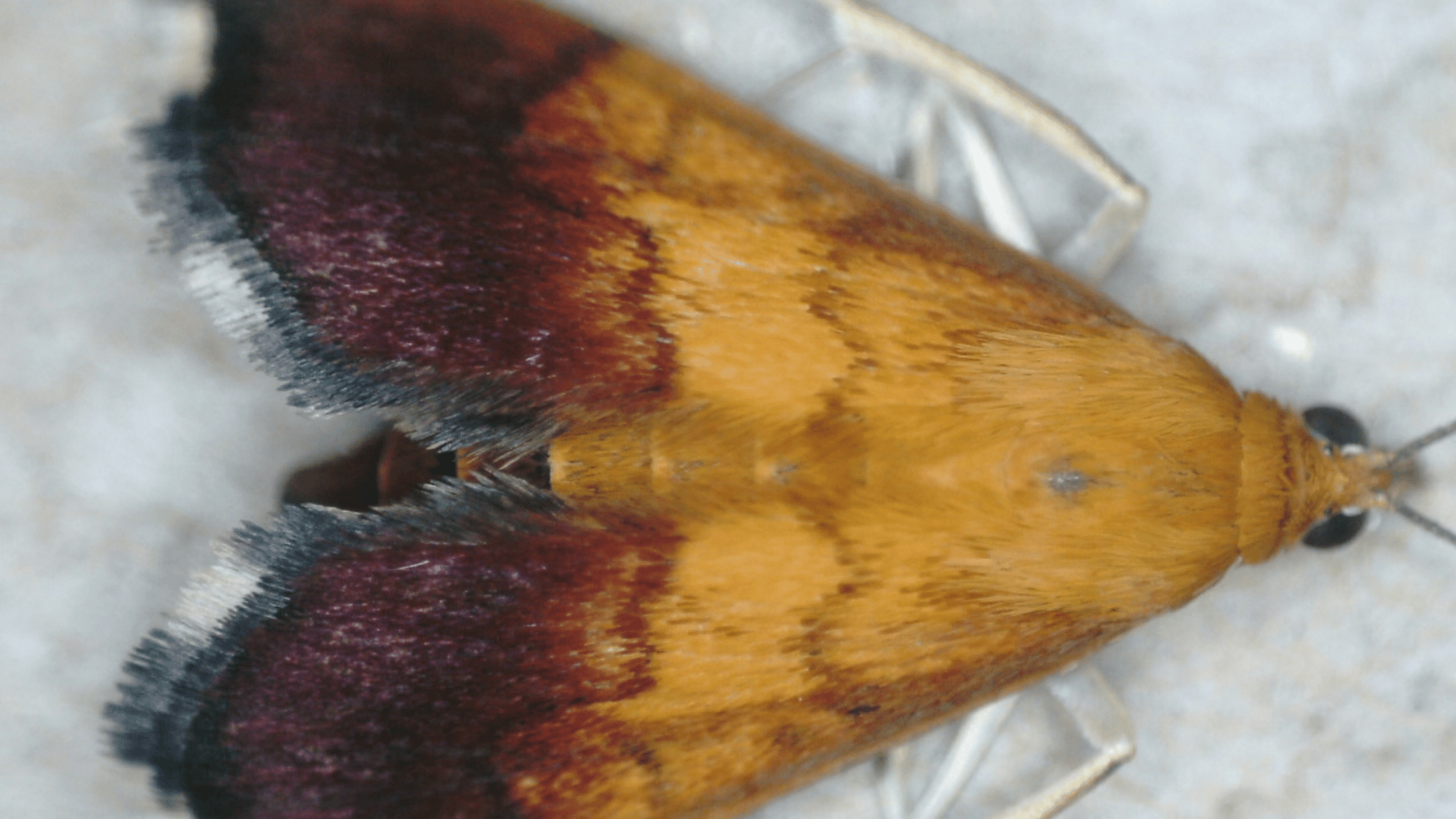
Figure 2b. The adult Bicolored Mint Moth that emerged.
Another day, I found tied leaves of Virginia Bugleweed (Lycopus virginicus) and collected a couple of leaf-ties occupied by caterpillars. The caterpillars pupated, then a fiery orange and purple moth emerged—one of many species of beautiful mint moths in the genus Pyrausta. This one was the Bicolored Pyrausta (Pyrausta bicoloralis)—see Figures 2a and 2b. It has been raised on a few plants in the mint family, including other plants in the genus Lycopus. Yet this was the first host plant record for North Carolina.
I imagine most insects would vote for a life of obscurity. And it is unlikely that these critters will become any less obscure, even if I help bring their early lives to light… Fame is a double-edged sword, and it isn’t clear if fame would help save the creatures we have on Earth. For example, sometimes famous critters are poached. But at least natural historians (those who investigate nature) and land managers have more information about the critters that live around us, and we can hope this will help us protect them.
References
https://www.inaturalist.org/observations/268064579
https://auth1.dpr.ncparks.gov/moths/view.php?MONA_number=5250.00
https://www.inaturalist.org/observations/307655161
https://auth1.dpr.ncparks.gov/moths/view.php?MONA_number=5040.00
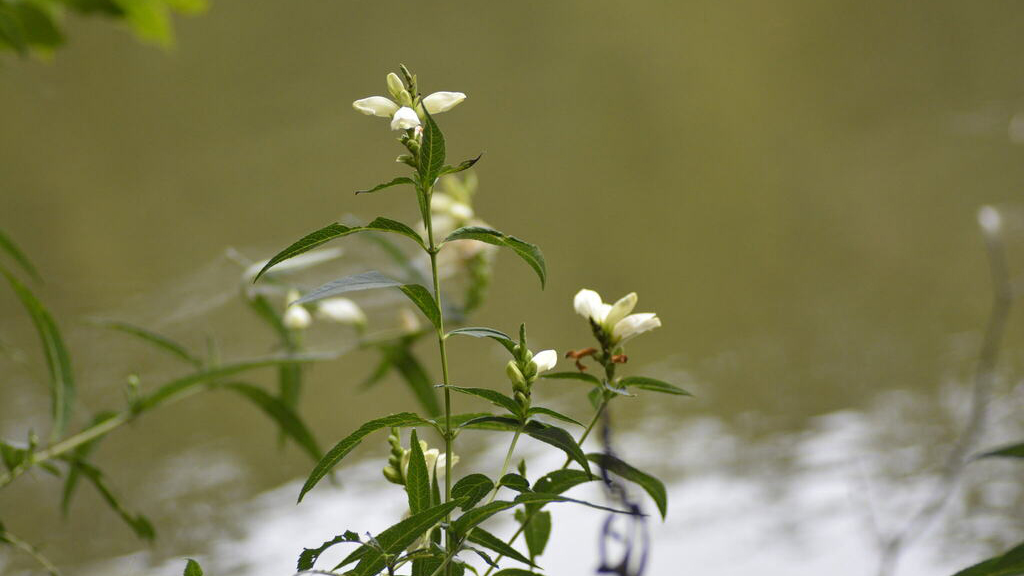
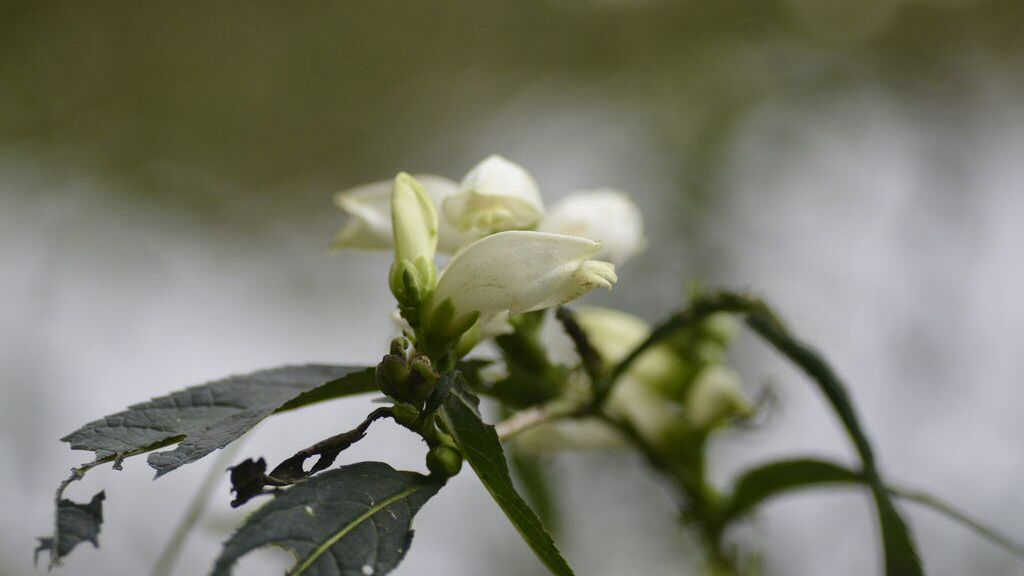
I was surprised to find that it was not on Skean’s plant list from the 1980s. In addition, John Connors, who was the first manager of Durant Nature Preserve and knows this place and its critters intimately, was also not aware of this species on the preserve. So I added it to the list, wondering what other treasures I might find here.
The next year I eagerly awaited the emergence of Turtlehead by the lake. That first year I could see it near the trail and by canoe, so I watched the shoreline both ways. No turtlehead emerged that year or the year after. I haven’t seen it since.
It seems strange that this plant would just appear and then disappear again so quickly. Here one year, gone the next? No evidence suggests that it was planted by anyone; it may well have established on its own. Perhaps it could have been there for a few years, but it seems like it was not there for long. It was not in an obscure, difficult-to-access location, so it seems like people would have noticed it. On canoe programs, I’ve met at least one other person who saw it, during that same year. Perhaps it goes dormant, staying underground for a few years and reemerging when conditions are right. This seems unlikely, as I have not found any information on dormancy in this species.
So why did it disappear? Maybe seeds established briefly in a less-than-ideal habitat, yet still good enough for plants to flower. Or it could be because small populations are at a disadvantage. Small populations are more likely to be decimated by random events, just because there are so few in the population. Or there could be too few in the population to establish in the first place (not enough mates, or not enough genetic diversity, etc.). Many small populations may disappear before we even notice they are there.
On the island of natural habitat preserved here, populations of many species are small, experiencing the disadvantages described above. Several other plant species have disappeared from the preserve (local extinction). These plants may have been rare all along, or may have been common but local to one small area, dwindling down to nothing over years. After three years of searching, I have found 389 of the 487 plants on the original list by Skean. I still hold out hope of finding some of the 98 plant species I have yet to document from the original list, but several of those plants are likely to be extinct here. As land use changes in and around the preserve, as climate changes, and as more people access the land, some plants and other species wink out of existence on the preserve, and some new living things find their way here (or were here, undetected, all along). So far, I have found 215 other plant species not on the original list—about 140 of these are native to this area. I mourn species losses but am excited whenever a “new” native plant shows up, or when I find a plant on the list that has eluded me.
But Turtlehead is a strange case. I am glad I intersected with it, and I hope it returns one day
References:
https://www.inaturalist.org/observations/185238443
Skean, J.D. 1982. The vascular flora and plant community types of Durant Nature Park, Wake County, North Carolina. M.S. thesis, North Carolina State University. Raleigh, North Carolina.