
Jump To:
Speed Humps (Vertical Treatment)
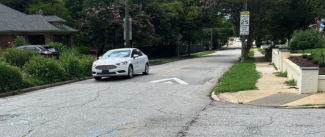
Speed humps are one of the most effective ways to slow down traffic. They are quick to install, cost less than many other traffic calming devices, and their small size makes them easy to place in different locations along a street. However, they can make the ride less comfortable for drivers, may cause small delays for emergency vehicles, and can increase vehicle noise as drivers slow down and speed up.
Speed Cushions (Vertical Treatment)
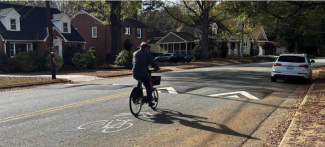
Speed cushions slow drivers down much like speed humps, but their wheel-gap design lets many emergency vehicles pass with little to no delay. People riding bikes can usually cross them with little impact, and their smaller size makes them easier to install in different locations. However, they cost slightly more and take a little longer to install than speed humps, can make the ride less comfortable for drivers, and may still cause small delays for some emergency vehicles.
Speed Table (Vertical Treatment)
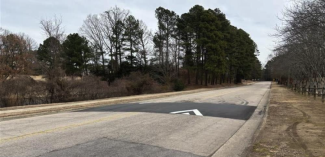
Speed tables help reduce speeds on streets with higher speed limits, such as 30 mph roadways. Their longer design creates a smoother ride for drivers compared to traditional speed humps. However, their larger size can make them harder to place in some locations and may cause small delays for emergency vehicles.
Neighborhood Traffic Circle (Horizontal Treatment)
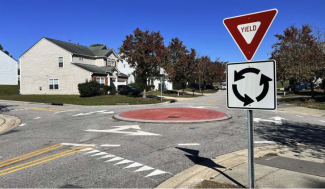
These intersection improvements help slow vehicles as they enter and travel through intersections, which can reduce the chance and severity of some crashes. They also improve pedestrian safety by lowering vehicle turning speeds and usually have little impact on emergency response times. However, construction can be more disruptive than other traffic calming options, and these treatments require enough space to work properly, making them unsuitable for some locations.
Split/Pinch Intersection (Horizontal Treatment)
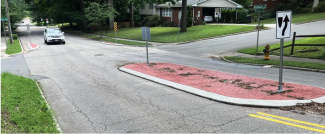
Split/pinch intersections slow vehicles by narrowing the roadway and guiding drivers through the intersection. They can make it safer for people walking by shortening crossing distances and making them easier for drivers to see. They have little effect on emergency response times and can be paired with other safety improvements. However, they may require more construction than some other traffic calming options, need enough space to install, and may not work as well on streets with less traffic.
Lane Narrowing (Horizontal Treatment)
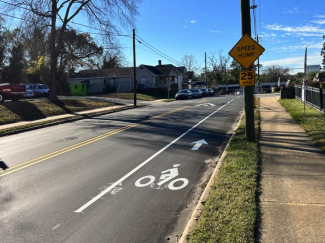
Lane narrowing helps slow traffic by making the road feel smaller, which encourages drivers to slow down. It can also create space for bike lanes, sidewalks, safety areas, or parking. It can be especially helpful on streets without sidewalks by creating more space between people walking and vehicles. Lane narrowing has little impact on emergency vehicles. However, it may not slow traffic as much as other traffic calming tools and may require new road markings. How well it works depends on the context of the street and are usually best paried with other devices that compliment each other.