Roadwork In The Winter: FAQs for Residents
Updated: Dec 8, 2025

Supported Services
- Department:
- Engineering Services
- Related Services:
- Roadway Design and Construction
Thank you for printing this page from the City of Raleigh's Official Website (www.raleighnc.gov)
https://raleighnc.gov/transportation/services/roadway-design-and-construction/roadwork-winter-faqs-residents
12/08/2025 5:13 pm
Updated: Dec 8, 2025
Winter brings cooler temperatures, shorter days, wet and sometimes frozen conditions. All of these elements can affect roadway construction. Some processes, like paving and pouring concrete, are sensitive to cold, and crews may need to pause work to ensure our roads are safe.
Even when it seems like work has slowed, crews are often on-site completing other important tasks that can be done in colder weather. This page explains why certain work may be delayed and how crews adapt to maintain quality and safety.
Cold weather can slow construction and affect materials. Asphalt cools too fast in very cold temperatures, so crews wait for warmer temperatures to make sure it compacts correctly and stays strong. Frozen or wet soil makes preparing the road base harder. Crews also wait to pour concrete in very cold weather to make sure it sets properly.
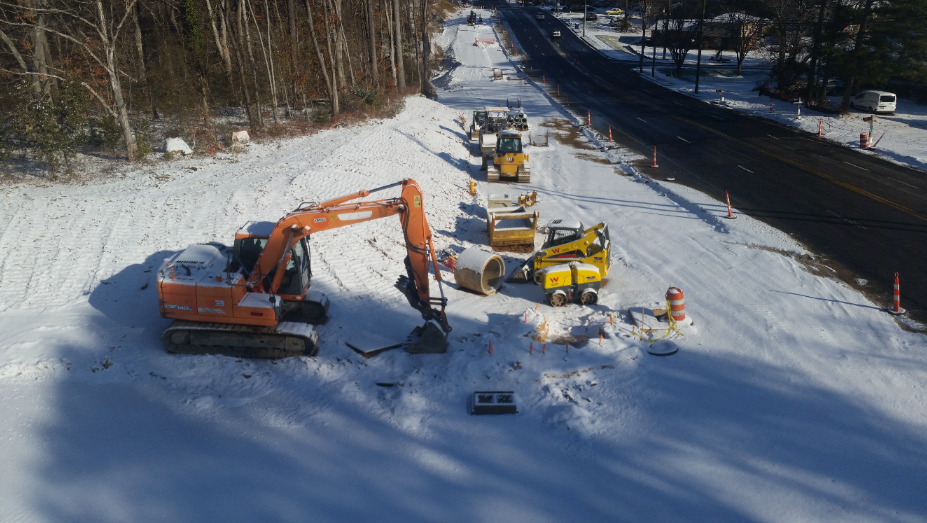
While crews limit paving in winter, they continue many other tasks. They install storm drains, work on utilities, grade the roadway, and prep sidewalks or foundations. Crews also maintain traffic control, install signs and guardrails, repair utility boxes, and clear debris or fix drainage. These activities keep projects moving safely even when asphalt and concrete work must wait for warmer weather.
Crews leave cones, barrels, and signs in place to protect everyone, even when they aren’t working. These markers keep drivers and pedestrians out of areas where construction materials, equipment, or unfinished work are present. They also guide traffic safely through or around the work zone until crews can return and complete the job.
Rain can slow or pause some work. Crews cannot pave asphalt, pour concrete, or grade when it’s wet because water prevents materials from setting and compacting. Wet conditions can also make the ground slippery and unsafe for crews and equipment.
Winter can slow certain construction tasks, which means lane closures, detours, or reduced speeds may stay in place longer than usual. Even if crews aren’t actively paving or pouring concrete, work zones remain for safety, and traffic has to move around them. Crews plan and stage work carefully to keep roads safe and traffic moving as smoothly as possible.