
"Of all of the drivers of housing costs—population growth, an influx of high-income earners, high land costs, and high construction costs—we have the most agency and direct control over restrictive zoning regulations. In the face of high growth and high demand to live in Raleigh, allowing more homes in more places makes housing more attainable and affordable for all families," said Patrick Young, Director of Planning and Development.
Here are some of the City's noted successes:
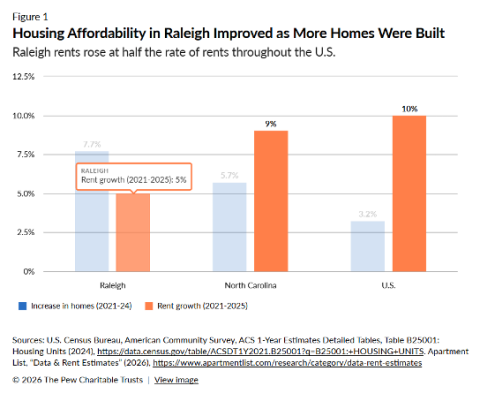
- More homes and lower housing costs. Changes to Raleigh's zoning rules have made it easier to build more homes, helping increase housing supply and lower costs.
- More housing choices. The City's "missing middle" reforms have made it easier to build townhomes, duplexes, and small apartment buildings, including more than 2,000 townhouses since 2021.
- Fewer barriers to building. Removing minimum parking requirements has made it possible to build homes that may not have been permitted previously
- More affordable homes. Changes to zoning rules and investments through housing bonds have helped the City expand its focus from preserving existing affordable homes to also building new ones.
The City was an early adopter of several housing strategies that have since gained momentum across North Carolina, including at the state level.
“Raleigh has been ahead of the curve in making it easier to build more types of housing, from townhomes and duplexes to accessory dwelling units – and this report shows those reforms are delivering real results,” said Emila Sutton, Director of Housing and Community Development.
“We are seeing the impact of policies designed to increase housing supply and expand housing choice. Affordability remains a challenge, but this research shows what we are doing is working and it is exciting to see this progress reflected.”
In the News
- Axios: Raleigh’s housing reforms led to declines in inflation-adjusted rents
“The study adds to the growing evidence that Raleigh's reforms have increased the amount of housing in the city significantly at a time when it continues to have one of the fastest-growing population.”
- WUNC: Raleigh building reforms led to more ‘missing middle’ housing, new report says
“The report, released Monday, highlights how Raleigh zoning reform, building rules and eliminating parking requirements since 2021 spurred the building of townhomes, apartments and other smaller, denser types of dwellings while at the same time lowering rent after accounting for inflation.”