Jump To:
Stage 1 Water Restrictions Effective April 20
Central North Carolina is experiencing a severe drought, and that includes the watersheds that feed Falls Lake and Swift Creek.
Thank you for printing this page from the City of Raleigh's Official Website (www.raleighnc.gov)
https://raleighnc.gov/index%2ephp/water-and-sewer/services/raleigh-water-capital-improvement-program/water-supply-and-drought-status
07/09/2026 1:28 pm
Current conditions, reservoir levels, and drought response in Raleigh
Updated: Jul 9, 2026
Central North Carolina is experiencing a severe drought, and that includes the watersheds that feed Falls Lake and Swift Creek.
Central North Carolina is currently in a Severe Drought based on hydrologic conditions. This includes the Falls Lake and Swift Creek watersheds.
You can view statewide conditions through the North Carolina Drought Management Advisory Council.
Raleigh is currently in Stage 1 Water Restrictions.
You might see some dry conditions in local streams and creeks. However, large reservoirs are built to store enough water to manage through most droughts.
Raleigh’s primary drinking water source is Falls Lake. The City has access to about 58% of the lake’s water, known as the water supply pool. The remaining water is reserved for downstream releases and is called the water quality pool.
It is important to note that the overall lake level does not directly reflect the available drinking water supply. It is normal to see exposed shoreline in shallow areas during extended dry periods.
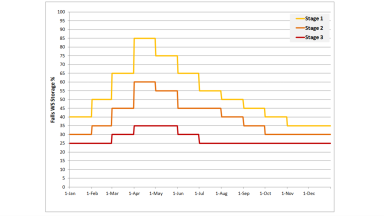
Raleigh manages its water supply using a Water Shortage Response Plan (WSRP). This plan is based on more than 100 years of data and the natural fill and drawdown cycle of Falls Lake.
Water use restrictions are triggered by:
The graphic below shows when different stages are activated based on water supply levels. Note that the stages vary by time of year.