
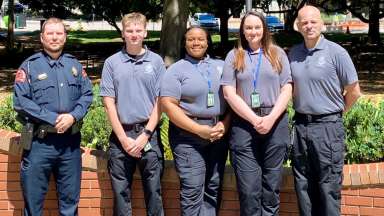
the noise compliance team

Sgt. J. Wilkins (in uniform) leads the four-member noise compliance team, which monitors noise across Raleigh.

‘We’re All Part of the Same Community’

Noise Compliance Team Emphasizes Education, Cooperation

“We’re working on creating partnerships between the City, businesses, and residents. We are all part of the same community and want the city to thrive.” That’s how Sgt. J. Wilkins explains the new noise compliance team’s approach. The four-member team monitors noise across Raleigh.

Last fall, the City Council approved updates to the Noise Ordinance. The goal was to better balance nightlife with neighborhood livability. The changes implemented decibel limits to prohibit loud noises and sounds that could disturb or frighten residents. The amendments took effect Jan. 1. Changes only apply to amplified sound from commercial establishments such as bars, restaurants, and clubs.

Earlier this year, the Raleigh Police Department hired four code compliance officers to focus on noise. These are civilian, non-sworn-in positions. The officers visit bars, restaurants, and clubs to check compliance with rules. They investigate reports of code violations and issue warnings, notices, and civil fines. Violations result in a civil penalty, which carries a $1,500 fee for three or more violations. A fourth violation means the establishment is not allowed to use outdoor sound equipment for 18 months.

The officers focus on community outreach and education. 

“At first, many businesses were nervous about the updated rules, but the more they learned, the more open they were to make changes,” says Wilkins.

The same goes for residents, some of whom have been affected by noise for years.

New team

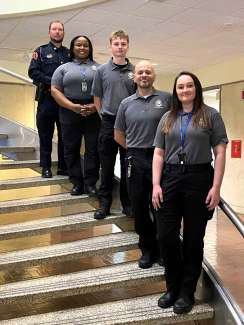
The noise team on the steps at City Hall

The noise compliance officers first completed four weeks of intense, hands-on training and are now working full-time.

Team members have varied backgrounds, from IT and sound stage experience to hospitality and school guidance counselor jobs.

The officers use decibel meters to measure sound. The meters take into account additional noise, such as that coming from traffic or air conditioning units. 
Code Compliance Officer Morgan Forbis says she has been surprised by how her ears can mislead her. “A few times I’ve thought the noise is probably over the allowed limit, but when we measure it, it hasn’t been.”

Wilkins said that some businesses, too, have decibel meters. “They’re monitoring the sound themselves and that can create an opportunity for education,” he says. “So far there have been only a few locations that have pushed back or challenged our readings. A large majority want to make a change and become compliant.”

Team members appreciate the opportunity to educate community members about the ordinance and help businesses. “We have had positive interactions with residents and most of them understand that we’re here to help all parties,” says Code Compliance Officer Kevin Thompson.

Lead Department:
Police

Subscribe

 
Scroll to top